
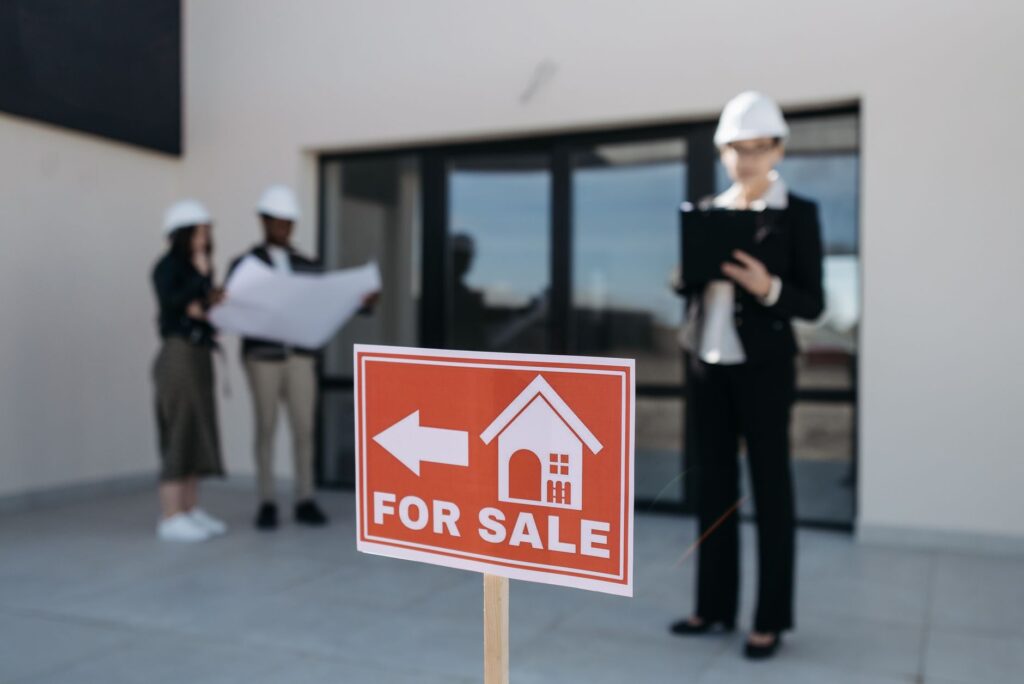
A sales valuation costs 0 kr. You get no bill for the visit or for the valuation itself. Most estate agents offer it free of charge, both the big chains and the vast majority of independent agents.
The valuation visit is the industry’s most important sales meeting. It is where agency agreements are made. The estate agent treats the visit as an investment in a possible future sale, and the price of the valuation never becomes a hidden cost for you as a homeowner.
You don’t sign anything, and you don’t commit to anything. No contract, no tie-in, no invoice. The visit to your home typically lasts half an hour to an hour, and you can get the figure the same day or in writing a few days later.
A valuation can do more than give you a figure to think about, and it makes sense to get several valuations before you decide.
Why a sales valuation costs nothing
There is more work behind a valuation than many people expect. The estate agent typically spends 30-60 minutes on preparation, going through BBR (the Danish building register), previous sales and comparable sales in the area. The visit to your home takes 30-60 minutes, and afterwards come 30-90 minutes of follow-up work if you ask for a written valuation and a sales budget. That adds up to nearly three hours in total. The figures are an estimate, not a guarantee, but they show that there is real work behind the figure you get.
For the estate agent, the value lies in the sale that may follow. Across the industry, a completed sale typically brings in a total fee of 50.000-100.000 kr., and that prospect makes the nearly three hours a sensible investment. Without it, a free sales valuation would not add up for anyone.
The valuation is an acquisition cost that the estate agent pays for the chance of being hired. If you say no thanks, the estate agent absorbs the time.
You can accept the visit with peace of mind, because it doesn’t commit you to anything. Always ask for the valuation in writing, with the reasoning behind the figure. A verbal figure is hard to hold anyone to later, whereas a written valuation gives you something concrete to work with when you decide whether to put your home on the market.

What a free sales valuation covers – and what it doesn’t
When the estate agent is standing in your living room, they go through the home room by room. They ask about its condition and the renovations you have had done, and at the same time show you comparable homes that have sold in the area recently. The visit typically lasts half an hour to an hour.
Some estate agents give you the figure straight away, while others come back to you in writing a few days later. Insist on the written version with specific examples of sold homes. A figure that has only been said out loud is not one you can hold anyone to later.
The free valuation includes:
-
A walk-through of the home, in which the estate agent looks at the condition and layout of the rooms.
-
Questions about condition and renovations, so the figure is based on the work that has actually been done.
-
Comparable sales in the area, showing what similar homes have sold for.
It does not include:
-
Paid valuation reports, if you need a more technical assessment.
-
The condition report, electrical installation report and energy label, which belong to the sale itself.
These reports are prepared by other professionals and are not part of the valuation. They belong to the stage when the home goes on the market, and they come as a separate cost on top, whatever the price of the sales valuation.
In practice, a sales valuation is the estate agent’s estimate of a realistic sale price, with a pricing strategy and an expected time on the market. The figure is made with a sale in mind, which is why the sales valuation costs 0 kr.

When the valuation costs money: the paid valuation
There are situations in which the valuation is not free. This typically applies in a divorce, with a deceased person’s estate or a transfer within the family, or when the bank or an authority needs a figure that can stand on its own. What they have in common is that there is no sale at the other end.
That explains the price. With a free sales valuation, the estate agent spends time in the hope of being hired and earning the fee. With a paid valuation, that prospect does not exist, so the time has to be covered in another way. The work is the same, but the business behind it is different.
The price of a paid valuation can look like this: a valuation report for a cooperative home (andelsbolig) costs 4.950 kr. including VAT, with no administrative fees and no surcharge for travel or parking. If you are in a hurry, the same report can be fast-tracked for 1.500 kr. including VAT, and it will then be ready within 48 hours of the valuation. The figures are an example of what a paid report costs, not a fixed rate for all homes and all purposes.
What you pay for is the document. You get an independent valuation that you can put on the table at the bank, send to your lawyer or use in a family that has something to divide. The point is independence. The figure is not there to sell a home to anyone; it simply has to stand firm.
For a sale, the free sales valuation is the right tool. You only need the paid report when you need a figure for a party other than a buyer.
Sales valuation or public property valuation
The two figures have almost the same name, but they are made for different purposes. The public property valuation (offentlig ejendomsvurdering) tells you what you are taxed on, while a sales valuation tells you what the home can realistically sell for. So you cannot swap one figure for the other.
| Aspect | Official property valuation | Sales valuation |
|---|---|---|
| Who carries it out | Vurderingsstyrelsen (the Danish Valuation Agency) | An estate agent |
| Purpose | Calculating property value tax and land tax | Sale, mortgaging, division of property and inheritance |
| Basis | Statistical register data, blind to the home’s condition | In-person visit and comparable sales |
| What the figure is good for | Tax | Setting a realistic sale price |
The two figures rest on different foundations. The model behind the public valuation knows the floor area, year of construction and location from the registers, but it knows nothing about your kitchen, the view, the traffic noise or the damp in the basement. It also looks backwards, and house prices nationwide have risen 6,8 per cent in the last year alone. A sales valuation, on the other hand, sees the home first-hand and is measured against recently completed sales.
According to Realkreditrådet (the Danish mortgage banks’ association), the public valuation deviates from market value by ±18-22% on average. The deviation can go either way, and there is no fixed rule of thumb that corrects it. That is why you should never use the public property valuation as the starting point for an asking price.
Part of the confusion comes from the fact that, in everyday speech, four different figures are called “what the home is worth”, even though each one measures something different.
-
The public property valuation is the figure you are taxed on, and in itself it says nothing about what a buyer will pay.
-
The asking price is a strategy that you and the estate agent choose, not a truth about the home’s value.
-
The sale price is what a buyer actually paid once the deal was done.
-
The net proceeds are what you have left once the outstanding debt, the estate agent’s fee, reports and other costs have been paid.
How to get the most out of your valuation
The valuation itself is free, so it is the effort you put in around it that decides how much you get out of it. Spend your time on the preparation and the questions rather than on optimising the price.
-
Book three valuations with different estate agents instead of just one. The spread between them tells you more than any single figure, and in Copenhagen, valuations of the same home are regularly hundreds of thousands of kroner apart. Book them within the same week, so the market is the same for all three.
-
Ask for three homes sold in the last six months, not three homes that are currently for sale. On the same day you ask about the fee, you should go home with a written sales budget, so you can work out what you will actually be left with.
-
Have your paperwork ready before the visit: the BBR notice (your extract from the Danish building register), the energy label, permits for extensions and receipts for major renovations. Without documentation, the estate agent errs on the side of caution, and caution means a lower price. If you live in a flat, bring the association’s accounts and the latest minutes too.
-
Remember that the valuation is a snapshot. If six months go by, or something changes in the home or the association, it should be revisited, and a new free home valuation is always an option.
In practice, the valuation gives you a realistic price level, a pricing strategy and an estimate of how long the sale will take, and with three valuations in hand you have a solid basis for choosing who should handle the sale. The free valuation is the first step towards a sale. It does not commit you to anything, and you can turn down all three without paying a single krone.
Leave a comment