
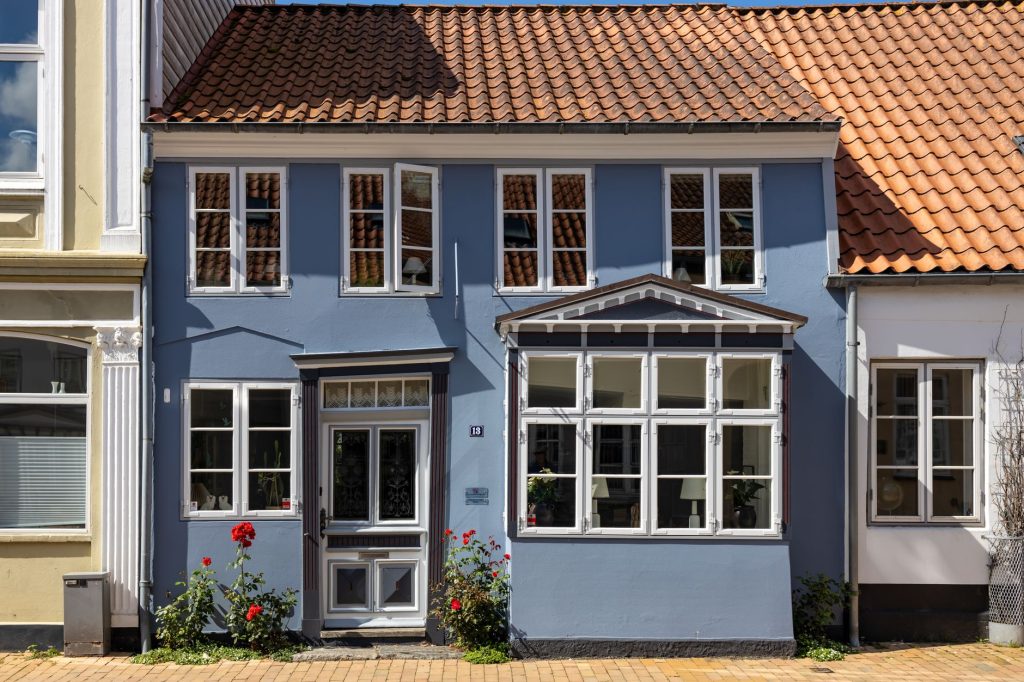
In practice, the price of your house depends on ten factors. Here they are, ranked by how much weight they carry:
-
Location and neighbourhood
-
Floor area and plot size
-
Property type
-
Roof, windows and installations
-
Practicality of the layout
-
The market and interest rates
-
Energy label
-
Kitchen and bathroom
-
Maintenance and tidiness
-
Furnishing and colour choices
Location carries the most weight, and you cannot change it. The type of home is also largely fixed. But condition, plot and documentation are partly within your control, and that distinction runs through the whole article: some things are a given, others you can improve before the house goes on the market.
Before you negotiate, it helps to know where the market stands. House prices nationwide rose 6,8 per cent over the past year and now stand at 18.626 kr. per m², the highest level ever measured. An average 155 m² house therefore costs 2,89 million kr.
The energy label is getting more attention now, because the buyer’s adviser looks at the running costs and at how much the buyer can borrow. A low energy label need not block the sale, but it gives the other side a bargaining point in the negotiation.
The price of a house is therefore the result of both the conditions you cannot change and those you can. The rest of the article goes through each of the ten factors, so you can see where your efforts pay off best.
Location and neighbourhood: the factor you cannot change
Location is the factor that matters most for the price. Imagine two identical houses, one in Gentofte and the other in Thisted. Their prices can differ by a factor of 3-4, purely because of location. Same bricks, same number of square metres, same condition, and yet a price difference running into millions. Location therefore matters more to a house’s price than any other single factor.
Even within the same municipality, neighbourhoods can differ in price by up to 30 per cent. A municipal average is therefore only a benchmark, not a valuation. If you lean on the municipality’s overall figures, you risk missing the mark, because your neighbourhood may be at the expensive or the cheap end. To set a realistic price, you need to look at the specific streets and neighbourhoods around you.
The market around you also plays a part. Low interest rates increase purchasing power and drive prices up, while rising rates dampen demand. You cannot control interest rates, but they are worth taking into account when you decide whether to sell now or wait. Interest rates set the limits on how much a buyer can offer, and those limits change regardless of how lovely your home is.
The supply in your area has the same effect. Few homes for sale in a desirable area push the price up, and structural population growth in the big cities keeps prices high over time. The figures show it: in 2015, 37 per cent lived in urban areas with more than 50.000 inhabitants; in 2025 the figure was 42 per cent. More people are moving to the cities, and that sustained demand helps keep prices up in the areas where people want to live.
You cannot change the location, but you need to know how much it matters before you set a price.
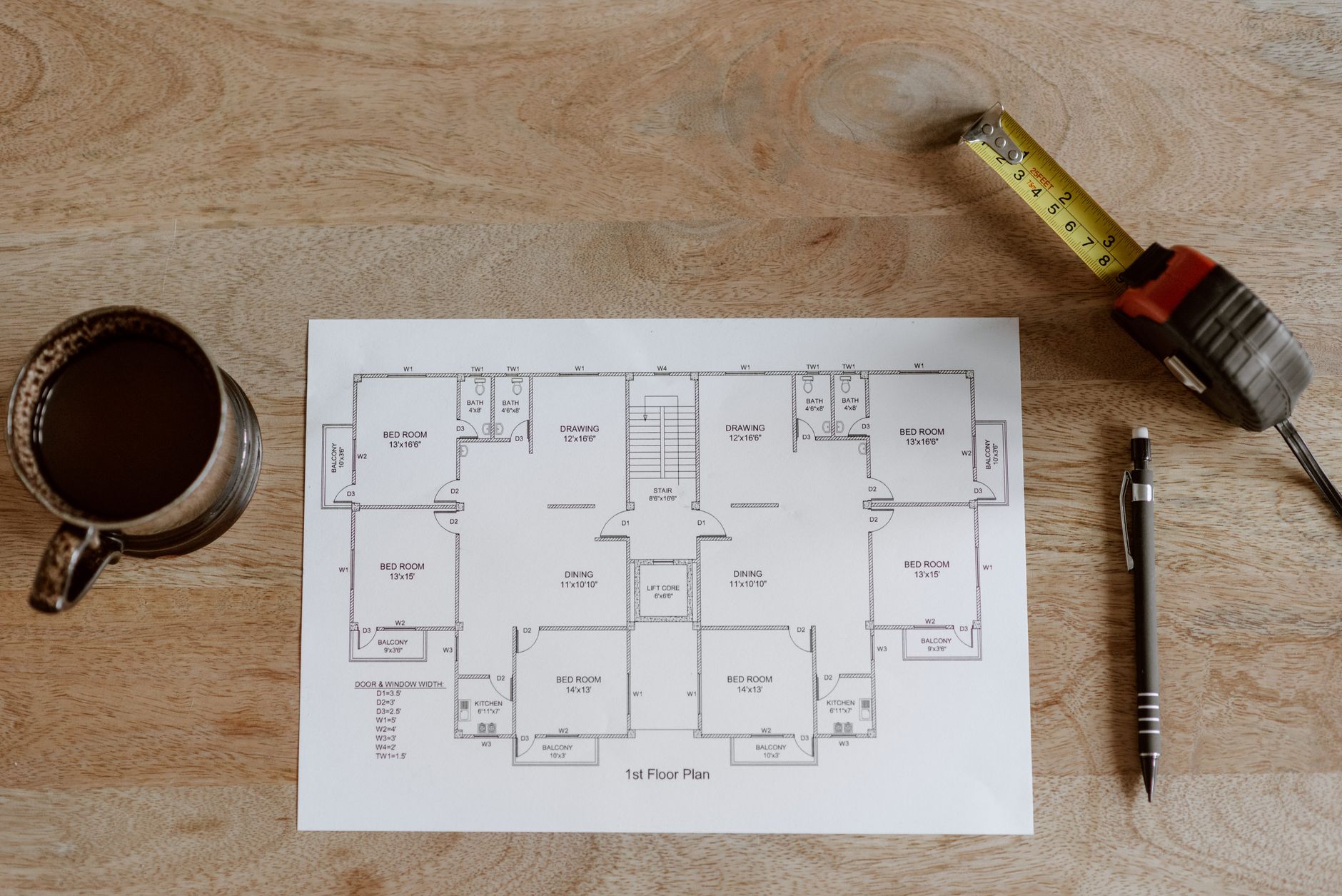
Floor area, plot size and BBR: why the registered figures count
The plot is calculated separately and does not follow the floor area. Two houses of exactly the same size and condition, but one with a 600 m² plot and the other with a 1.400 m² plot, can be hundreds of thousands of kroner apart without the difference showing up in the price per square metre at all.
When setting the price, it is important to know which square metres count. The distinction is easy to overlook, but it has a direct bearing on the valuation of the house.
Counts towards the floor area
-
Living areas and rooms are included in full in the stated floor area.
-
A converted loft counts if the ceiling height is over 1,5 m. The loft in particular is often registered incorrectly in BBR.
Does not count towards the floor area
-
The basement is measured separately and counts for less in the price.
-
An uninsulated conservatory does not count towards the floor area.
-
A garage and carport add value, but not floor area.
-
A covered terrace does not count either.
It is BBR’s registered floor area that counts, not the area of the basement or shed. So check the BBR notice before the house is valued. If the area is registered incorrectly, the error carries over into price calculators and the estate agent’s starting point, and then you are negotiating from the wrong figure.
A larger home fetches a higher price, but the price per square metre typically falls for very large homes.
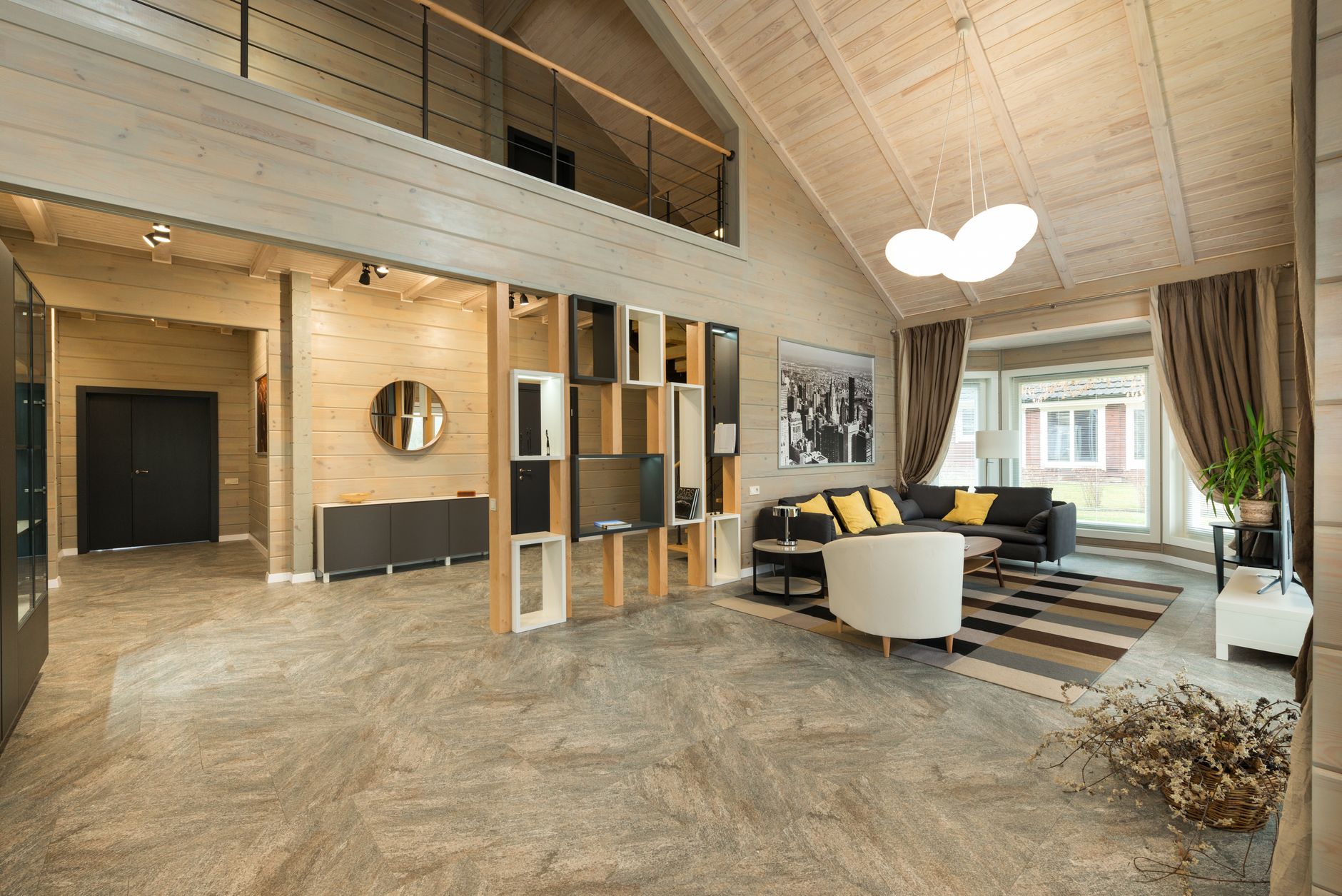
How the type of home and the layout affect a house’s value
The type of home determines which features matter for its value. What lifts the price of a detached house can be almost irrelevant for an owner-occupied flat, and vice versa. That is why it makes no sense to judge all homes by the same yardstick.
| Property type | Carries the most weight | Carries less weight |
|---|---|---|
| Detached house | Plot, roof, layout and the character of the street | Age of the kitchen |
| Terraced house | Position within the development, garden, parking space and the association’s finances | Floor area alone |
| Owner-occupied flat | Floor level, lift, balcony, view and the association’s debt | Age of the building |
| Cooperative housing (andelsbolig) | The maximum price, a ceiling that an estate agent’s valuation cannot ignore | – |
| Holiday home | Distance to water, views, zoning status and year-round status | Insulation and condition |
Two types of home stand out, because they cannot be valued like a detached house. The first is cooperative housing (andelsbolig). Here there is a rule you need to know before you start thinking about price. The cooperative’s maximum price is a ceiling, and an estate agent’s valuation cannot ignore it. So you cannot negotiate your way above the ceiling, however sought-after your home is. It is the only type of home where the price is not freely negotiated, and that changes the whole starting point for what you can expect to get.
The holiday home follows a different logic. Here it is not the condition that drives the price but the location, in the most literal sense of the word: distance to water, views, zoning status and year-round status carry the most weight. Insulation and condition count for less. A holiday home close to the water with an unobstructed view can therefore sell for more than a better-maintained house further inland. That is worth bearing in mind when you weigh up where your efforts will pay off best.
Once you know your type of home and the rules that apply to it, you also know which features to highlight when the house goes up for sale.
House valuation: the documents and reports that move the price
The valuation of your house does not depend only on bricks and square metres. Six documents can move the figure, and you should have them in order before an estate agent or an online price calculator puts a figure on it.
-
The BBR notice, where you check the floor area, year of construction and number of rooms.
-
Receipts for major work, showing the year it was carried out.
-
Building permits.
-
The energy label.
-
Utility information on the heating source, annual consumption and any obligation to connect to a supply network.
-
Association details if the home is an owner-occupied flat, a cooperative home or a terraced house that belongs to an association.
Documentation such as invoices, building permits and descriptions of the work carried out helps make the condition report accurate and complete. If the paperwork is missing, you are negotiating from a weaker position than you need to.
What does it cost, and what do you get back?
Not every measure pays back the same. Some cost almost nothing and shorten the time on the market, while others run into hundreds of thousands of kroner without being fully reflected in the price.
| Measure | Price | Effect |
|---|---|---|
| Tidying and cleaning | 0-3.000 kr. | Noticeably shorter time on the market |
| Painting worn walls | 5.000-20.000 kr. | |
| Fixing visible defects | 5.000-40.000 kr. | |
| New kitchen | 60.000-200.000 kr. | Rarely recouped in full in the price |
| New bathroom | 80.000-250.000 kr. | Rarely recouped in full in the price |
The reports and your liability as the seller
The condition report and the electrical installation report are not required by law in themselves, but they are part of the home inspection scheme (huseftersynsordningen). If you opt for the scheme, the buyer can take out change-of-ownership insurance, and your liability changes significantly.
Without a condition report, you as the seller carry a 10-year liability for hidden faults and defects under the general rules of the Danish Sale of Goods Act (købeloven). With the reports and change-of-ownership insurance, that liability can in many cases be reduced to 0 years in the areas the insurance covers. That difference makes the reports more than a formality.
The energy label is the only one of the three documents that, as a rule, is required by law when you sell most year-round homes over 60 m². It must be in place when the house is advertised, and it is valid for 10 years. You may not advertise the house for sale without a valid energy label, so it is one of the first things you should tick off.
If the energy label is old and you have since added insulation or changed your heating source, it can pay to get a new one. As a rule the seller pays for the reports, but the parties can agree otherwise. A combined package with a condition report, an electrical installation report and an energy label often costs around 11.000-17.000 kr. for a standard home.
The housing market in 2026: house prices in Denmark and your sales valuation
The forecasts for the 2026 housing market point in the same direction, but with varying strength. That is why you should look at what each forecaster expects before you trust a single figure.
| Forecaster | Forecast for 2026 | Forecast for 2027 |
|---|---|---|
| Realkredit Danmark | 6-6,5% nationwide | – |
| Boligsiden | 3-4 % | – |
| Nordea | approx. 4 per cent | a further 3,5 per cent |
The spread is no accident. Realkredit Danmark is at the high end, while Boligsiden and Nordea land at 3-4 per cent. Nordea has also worked out what this means for an ordinary house. According to Nordea, an average 140 m² house could go from 3.001.000 kr. to 3.232.000 kr. in two years. You can hold figures like these up against your own home when you consider when it makes sense to sell.
What does a house cost right now?
Figures from Danmarks Statistik (Statistics Denmark) for the 1st quarter of 2026 show that single-family houses rose 1,5 per cent over the quarter, while holiday homes rose 3,8 per cent. In other words, holiday homes outpaced single-family houses that quarter. That is worth remembering if you own a holiday home.
In the Capital Region, single-family houses rose 10,9 per cent year on year. House prices in Denmark, in other words, do not move in step across the whole country, and a national average can hide considerable differences between regions and neighbourhoods. It is the same point as with location: look at the local picture.
Supply is pulling in the same direction
Another factor is supporting prices. The supply of houses is falling because fewer new detached houses have been built since 2022. When fewer new homes are added, demand meets a narrower choice, and that typically keeps prices up.
On top of that, a new buildings directive is expected, with a focus on renovation rather than demolition and rebuilding. The reason is that the CO2 emissions from demolishing and building new are high. If that happens, existing homes will become more valuable, because replacing them with new buildings will be a less obvious option. It is yet another reason why condition and maintenance are set to carry more weight in future.
What does this mean for your sales valuation?
Some of the ten price drivers are beyond your control. The location is a given, and the type of home is largely fixed too. Condition, plot and documentation, on the other hand, are things you can influence, and that is where a sales valuation of a house gets interesting. The figure is not plucked out of thin air; it is based on what you can document and the state your home is in.
The market is pushing prices up in 2026, whether you believe in 3 or 6 per cent. But that does not automatically mean your home will end up at the top end of the range. Preparation does. Check BBR, dig out the receipts, get the energy label in order and fix the visible defects before anyone puts a figure on the house.
Would you like to know what your house is worth right now? Then get a no-obligation sales valuation from Brikk and see how location, condition, plot and documentation affect your actual price.
Leave a comment