
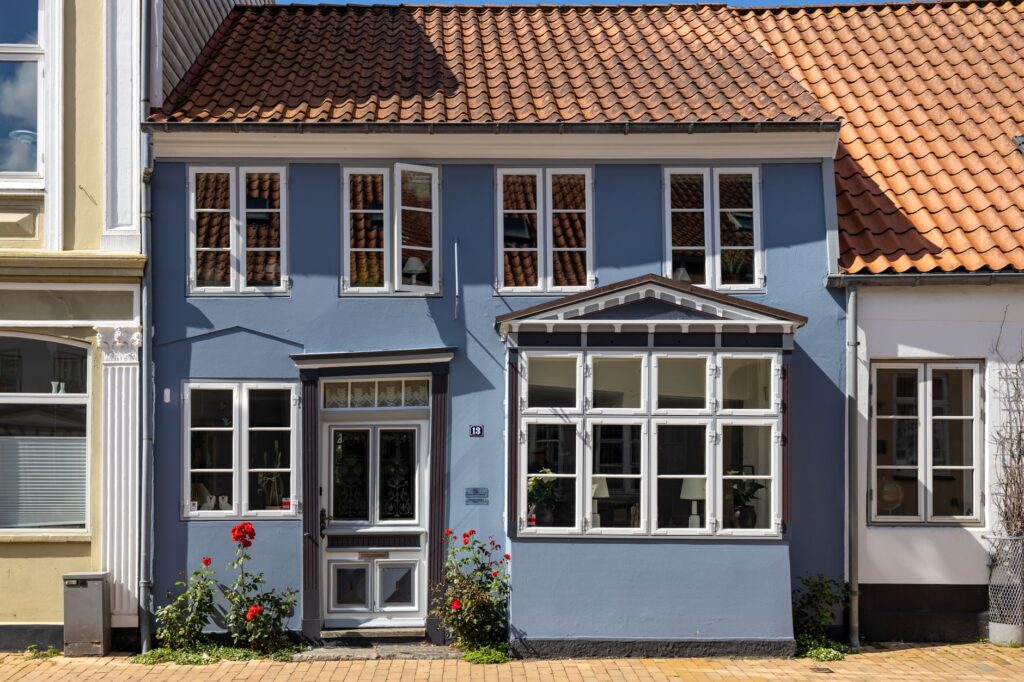
If you want to know what your home is worth, there is no single right answer. There are three figures, and they almost never point to exactly the same thing. The public valuation is made for tax purposes, not to show what the home could sell for today. The estate agent’s valuation is based on local knowledge and the condition of the home. And the actual selling price is what one particular buyer is willing to pay at one particular moment. These are three very different measures, even though they all concern the same house.
So think of a house valuation as a range rather than a fixed point. Differences of 15-25 % between the three figures are perfectly normal and to be expected, and they do not mean that anyone has got their sums wrong. A public valuation of 6 million kr. can easily meet a market that will only pay 5,2 million kr. Both figures can be correct for their own purpose.
Accuracy also varies depending on who does the valuing. An estate agent’s valuation typically lands within ±5-7 % of the final selling price, because it is based on knowledge of the local market and the home’s actual condition. Online calculators give a quick initial overview, but often have a margin of error of ±15-30 %.
The rest of this guide is about why the figures differ from one another, and how you can actively use the difference when your home is valued.
The difference between a valuation and price expectations
The public valuation is first and foremost an administrative figure. It is used as the basis for property taxes, including property value tax (ejendomsværdiskat) and land tax (grundskyld), and it is not built to show what your house is worth in real time. Although the new valuation system uses models and large amounts of data to hit the mark more precisely than before, the valuations are still made on a general basis. This means the figure can be both reasonable and out of date at the same time, without anyone having done anything wrong.
An estate agent’s valuation works differently. It is based on local knowledge, the current condition of the home and the buyer interest in the market right now. Here, there is a person who knows the area, has seen your house and knows what similar homes have sold for recently. That makes the estate agent’s valuation a much better guide to what you can realistically expect when you sell.
The selling price is something else entirely. It is not an estimate but a fact: what one particular buyer is willing to pay at one particular moment. That is why two almost identical houses on the same street can end up with very different selling prices, depending on who bid, when the home was put up for sale and how the negotiations went.
The asking price is the seller’s preferred starting point, and it may have been set in the expectation of negotiation. A high asking price therefore does not in itself tell you whether the home is expensive or whether there is room to negotiate the price down. It says more about the seller’s expectations than about the market’s assessment.
This is where the difference between a valuation and price expectations becomes clear. The valuation figure is more static and standardised, because it is based on fixed models and general data. The selling price is dynamic and depends on direct interaction in the market between buyer and seller. So treat a valuation as an overall estimate rather than jumping to a quick conclusion based on the advertised price. The listing is an opening for a conversation, not the final answer.
If you want a qualified estimate of what your house is worth, you could consider booking a house valuation and having the figures assessed as a whole rather than one at a time.
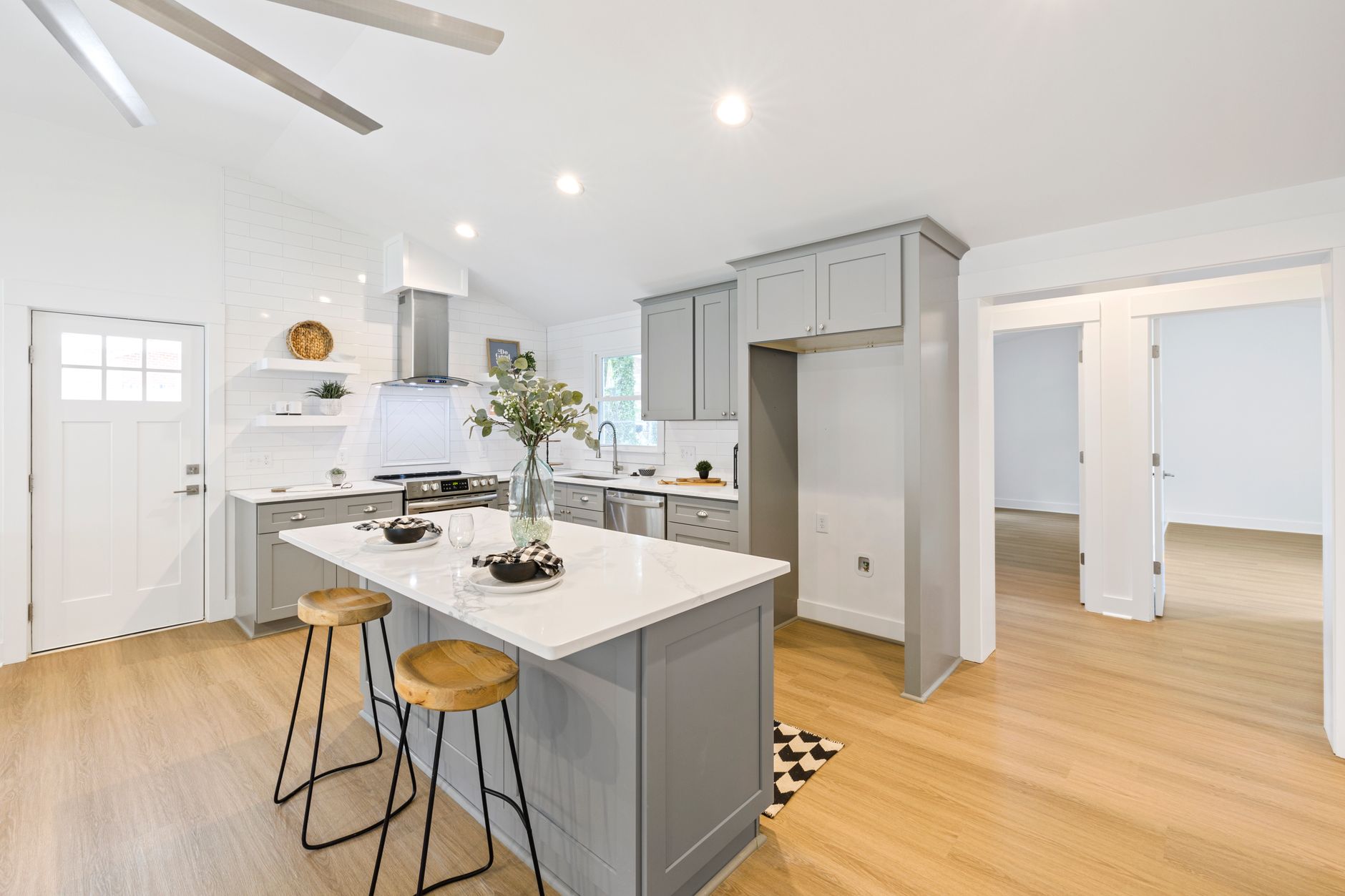
What affects a house’s value?
Some things about your home can be changed, and others you simply have to live with. Know the difference, because that is what decides where you should focus your efforts if you want the valuation to go up.
-
Location and neighbourhood carry the most weight of all, and they cannot be changed. Neighbourhoods can be up to 30 % apart, and even two identical houses on the same street can differ in price by 10-15 % purely because of views, noise and natural light.
-
Living area and plot size count for a lot, but the price per square metre falls the larger the home is. A 90 m² house typically has a higher price per square metre than a 200 m² house in the same neighbourhood, and the plot is counted separately from the living area.
-
The market and interest rates can move the price. An interest rate rise of just 0,5 % can push house prices down by 3-5 % within a few months, while rate cuts can set off price rises.
-
The energy label matters more than it used to, because the buyer’s adviser looks at the running costs and therefore at how much the buyer can borrow. A home with low energy consumption and good insulation is particularly attractive at times of high energy prices.
The four factors interact, and they do not carry equal weight when it comes to the final valuation.

Public valuation vs. estate agent’s valuation
A public valuation and an estate agent’s valuation are calculated in two different ways. One is based on statistics and large amounts of data, the other on a close look at your particular house. If you want to understand how your home’s value is assessed, it is this difference that explains why the two figures rarely end up in the same place.
| Public valuation | Estate agent valuation | |
|---|---|---|
| Method and basis | Statistical mass calculation based on objective criteria such as location, plot area, living area, year of construction and type | Individual assessment of the home’s current condition and the local market right now |
| Updates and underlying data | Typically updated every other year, and the underlying data can be 12-18 months old | Kept up to date with the sales actually completed in the area |
| Assessment of condition | None. The system cannot tell the difference between a worn-out ’70s kitchen and a fully renovated home | Yes. The home’s condition is factored directly into the valuation |
| Micro-location | Not captured. A corner plot and an interior plot are treated the same | Yes. Views, noise, light and position on the street all count |
| Deviation from market value | Can be 10-25 % below or above the true market value. In areas with rising prices it is on average 8-12 % below the actual selling price, while in areas with falling prices it can be 5-15 % above | Stays close to what the market will actually pay |
| Accuracy | Depends on where the market is in the price cycle | Typically ±5-7 % |
The difference in accuracy comes mainly from the underlying data. The public valuation is typically updated every other year, and since the data behind it can also be 12-18 months old, the figure mostly tells you what the market looked like some time ago. An estate agent’s valuation, on the other hand, is based on what similar homes have actually sold for recently, and on how your home compares with them.
Sales older than 6-12 months should only be used with significant adjustments. That applies whoever carries out the valuation, because a market can move quite a lot in a year. That is why the transaction price, meaning what a buyer actually paid, is the best benchmark to measure both valuations against.
Improvements that increase a house’s value
The rule of thumb is simple: tidy up, paint and repair, and steer clear of rebuilding. Decluttering, cleaning and painting worn walls costs 0-20.000 kr. and shortens the time on the market, while a new roof rarely adds as much in value as it costs. The roof removes the price reduction the buyer would otherwise demand, and that is a different kind of gain from a price increase.
Most of the improvements that increase a house’s value are at the cheap end. The small jobs that make the home look well kept at first glance move the figure more than major building work.
| Improvement | Typical cost | Effect on value/saleability |
|---|---|---|
| Fixing visible defects | 5.000-40.000 kr. | Medium effect, shorter time on the market |
| Decluttering, cleaning and painting worn walls | 0-20.000 kr. | Small effect, noticeably shorter time on the market |
| New kitchen | 60.000-200.000 kr. | Rarely recovers the full cost, but typically shortens the time on the market |
| New bathroom | 80.000-250.000 kr. | Rarely recovers the full cost, but typically shortens the time on the market |
| Cavity wall insulation | 15.000-25.000 kr. | One of the quickest improvements to pay for itself on older houses |
| New windows | 80.000-150.000 kr. | Energy improvement with a direct increase in the house’s value |
| New roof | 150.000-300.000 kr. | Removes a price deduction rather than adding value |
Energy improvements are among the most profitable changes you can make. Insulation, new windows and optimising the heating source give the most direct increase in value, and a better energy label makes the home more attractive and can raise its market value. The buyer’s adviser works out the running costs, so low energy consumption can increase how much the buyer can actually borrow.
Renovations that increase a house’s value follow the same logic: kitchens, bathrooms and energy improvements often give the biggest return, while expensive one-off projects such as a new roof are mostly about avoiding a price reduction. Small details such as new floors, painting the walls or replacing skirting boards can together give a boost that exceeds the actual costs.
Avoid over-renovating and very personal interiors. In Denmark, a swimming pool can actually make a home harder to sell, because the next buyer rarely shares the same taste. Instead, go for improvements that make a difference in everyday life and can be documented, such as new floors, energy renovation or an updated kitchen-diner.
Book a house valuation and use the figures properly
No single valuation tells the whole truth about your home. The public valuation is made for tax purposes, the estate agent’s valuation is a market-based estimate, and the selling price depends on who actually bids on your particular house. So rather than chasing one precise figure, work with a range and keep measuring it against the actual sale prices in your area. Those are what show what the market will really pay – not the listing, and not the figure in the valuation system.
The same applies when you look at a property valuation. It is based on registers, and if there are errors in the information about your living area, your buildings or the plot, it can affect the valuation directly. If you are unsure whether the figures are right, you can go through the information and look into raising an objection or making a complaint. The rules depend on whether it is a preliminary or a final valuation and on what type of property you own, but it is worth pursuing if something looks wrong. An error in the register can mean you pay too much tax year after year.
For a clear picture of what your home is worth on the market right now, you can book a house valuation with Brikk. Brikk offers a free, no-obligation valuation over the phone, and you have a dedicated estate agent as your contact throughout the process. A valuation from an estate agent who knows your area gives you a market-based estimate rather than a statistical average, and that is the kind of figure you can use when deciding whether to sell.
Put your money where it makes a difference. Decluttering, painting, visible repairs and documented energy improvements boost saleability and make the home easier to sell, while expensive and very personal conversions often do not pay for themselves in the price. With energy improvements, you should have a clear idea of when the investment will pay for itself, if it does. Use the valuation as a guide, the sale prices as the final answer, and focus your efforts where they actually show in the figures.
Leave a comment