
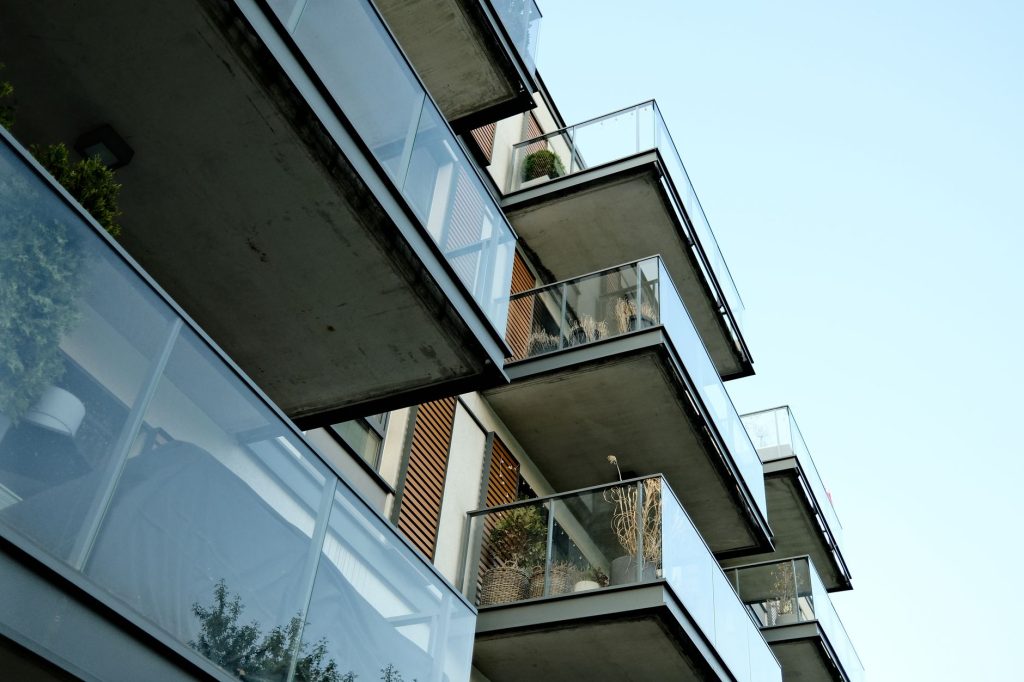
An owners’ association (ejerforening) is a joint body for running and administering the property, made up of all the owners of the owner-occupied flats in the building, and the moment you own one of them you are automatically part of it. It is not an association in the usual sense: there is no signing up, and nothing about it is voluntary. The community comes with ownership.
The association is responsible for running and maintaining the shared parts: the roof, facade, stairwell, basement, courtyard and shared technical installations. You own your flat individually, while the plot and the rest of the property are owned jointly by all the flat owners. The highest authority is the general meeting, where every owner has a vote and can help decide on the budget, maintenance and changes to the articles of association.
Decisions made by the community are felt in your everyday life and in your finances. The rest of this article explains how membership works, what the shared costs cover and how they are divided, what the articles of association mean for the day-to-day rules, what liability means for your finances, and how to check an owners’ association’s finances and documents before you buy.
Owners’ associations for owner-occupied flats and automatic membership
When you buy an owner-occupied flat, membership of the owners’ association comes with the purchase. You automatically become a member the moment you are the owner. There is no application, no signing up and no option to say no thanks. Membership is tied to the flat, not to you as a person, and you cannot opt out of it as long as you own the flat.
Membership therefore continues when the home changes hands. If you sell your flat, the membership passes to the new owner, who thereby takes over both the rights and the obligations in the association. In other words, the new owner inherits the flat and the place in the community that goes with it.
Ownership is divided. You own your flat individually, but common areas such as stairwells, basements and lofts are owned by the owners’ association, that is, by the owners jointly. This division means that some things are your responsibility alone, while others are things you decide together with the other owners.
Day-to-day administration is handled by the board, which is responsible for the daily running, the accounts and the practical tasks. The board is elected by the general meeting, and if the general meeting so decides, an administrator can also handle the day-to-day running on the association’s behalf.

Shared costs in the owners’ association and how they are divided
Shared costs in an owners’ association are the regular payments you make to the association as an owner, typically every month. They fund the day-to-day running, the administration and the maintenance of the property and the common areas, and you cannot get out of them as long as you own your flat.
These are the items most often behind the amount:
-
Buildings insurance, which covers the property itself
-
Cleaning of the stairwell
-
Electricity for common areas, such as lighting in the stairwell, basement and outdoor areas
-
A caretaker who handles minor practical tasks
-
Administration, including the administrator’s fee, accounts and legal assistance
-
Refuse collection and waste management
-
Routine maintenance of the common areas
Some associations also include joint loans, savings for major works or on-account payments for water and heating in the charge. It varies from association to association, so check exactly what is included in each one.
How much of the bill lands with you is determined by the distribution figure (fordelingstal). This is your share of the property, and it is usually stated in the articles of association. It is often based on the size of the flat or its undivided share of the property, so a larger flat pays more than a smaller one. Your distribution figure works as your fraction of the total costs: if your figure is higher than your neighbour’s, you also pay a larger part of each individual item. There can be exceptions, however, if the articles of association or a decision at the general meeting have set a different split for certain costs.
Low shared costs are not automatically a plus. If the association skimps too much on maintenance, it can end up with bigger extra bills later, when the roof or the facade has to be replaced anyway. Conversely, high shared costs can be a healthy sign if they cover things such as savings or debt repayments. What matters is whether the finances add up and are transparent, not whether the figure itself is low or high.

Articles of association in the owners’ association: house rules, letting and pets
The articles of association are the owners’ association’s rulebook. Among other things, they set out the rules for using the property, dividing costs, decisions at the general meeting and the board’s duties. The articles of association can have a big impact on your everyday life, from how you may use your flat to how the shared costs are divided between the owners.
If the association has not adopted its own articles of association, the standard articles of association (normalvedtægt) laid down by the Minister for Housing apply. They govern matters such as the general meeting and the board, voting rules and majority requirements, the association’s administration, changes to how utility costs are divided and the division of maintenance. They also cover access to the individual flats, electronic communication, the right to keep pets, the provision of security, restrictions on your right to let and any sanctions if you use the property in a way you are not allowed to.
The house rules are the part of the rules you notice most in everyday life. They are there to ensure peace, order and consideration between neighbours, and they typically set the framework for:
-
How much noise is acceptable, and at what times of day there must be quiet
-
How common areas such as the stairwell, courtyard and laundry room may be used
-
How waste is sorted and handled
-
Where and how you may park
-
Practical matters concerning renovation and general conduct in the building
The rules are not the same for short and long rental periods. It is important to know the difference before you plan to let your flat.
| Short-term letting | Long-term letting |
|---|---|
| Often more strictly regulated. Many associations have banned short-term letting altogether, while others allow it under special conditions, such as a maximum number of days a year or a requirement for the board’s approval. | In many owners’ associations you are allowed to let your flat for longer periods, but this often requires the board’s prior approval. |
Before you sign, you should also check the rules on pets and major alterations to the flat. Both may require the board’s approval, and the articles of association may restrict what you can do with your owner-occupied flat. Many buyer disputes arise because the articles of association were not read thoroughly before the purchase. You may end up with a flat where short-term letting is banned, where your pet needs approval, or where the conversion you had planned is not allowed at all. Read the documents before you buy, not after.
Liability in the owners’ association and what it means for your finances
The owners are liable for the owners’ association’s obligations personally, pro rata and secondarily (subsidiært), in proportion to their distribution figures, unless the articles of association provide for more extensive liability. That sentence is one you should understand before you sign anything at all. Liability in an owners’ association can hit your personal finances if the association runs into financial difficulties.
The three words each cover a different aspect of what you are liable for:
-
Personal liability means that you are liable with everything you own, not just with your share of the association’s assets.
-
Pro rata liability means that you are only liable for your share of the obligation, in other words the part that corresponds to your distribution figure.
-
Secondary liability means that creditors must first try to recover their claims from the owners’ association itself before they can pursue you as an owner.
The standard bylaws state that members are jointly and severally liable, but pro rata as between themselves. Joint and several liability means “one for all and all for one”, and in practice a creditor can direct its entire claim at a single member if the owners’ association does not pay. That member must then make a recourse claim against the other members for their share. The pro rata liability between the members means that your liability to pay is limited to the share of the association’s debt that follows from the distribution figure adopted for your flat. In practice, creditors rarely approach the members directly, because the owners’ association is usually able to pay.
When you buy an owner-occupied flat, you take over the flat’s share of any joint loans the owners’ association has taken out. If the association has borrowed for a new roof or a facade renovation, your part of that debt comes with the purchase and is paid on an ongoing basis through the common charges. When selling, the seller must make sure they are released from any liabilities to the owners’ association, so that no old debt stays attached to the flat when it changes hands.
Checklist for buying an owner-occupied flat: assess the finances and documents
Work through this checklist for buying an owner-occupied flat in order before you make an offer, so you know what the owners’ association’s finances mean for you.
-
Start with the latest annual accounts to see how the money has actually been spent and whether the association has run a deficit or had unforeseen expenses. Then read the current budget to see what expenses the association expects and whether any increases in the common charges have been announced.
-
Go through the minutes of the most recent general meetings to find any major projects planned, such as work on the roof, facade or windows, or replacing the pipes. Check whether the project has been approved, financed and included in the budget.
-
Look into the distribution figures, joint loans, savings and maintenance plan. An up-to-date and realistic maintenance plan reduces the risk of sudden extra costs, while a lack of savings or opaque debt can be warning signs.
-
If you need help, Brikk can go through the bylaws, accounts, budget, minutes and distribution figures with you, so you get a clear picture of what the owners’ association means for your finances, both now and when the time comes to sell.
That review shows whether your monthly common charges are in line with what you get for them, and whether you will have a saleable asset when the day comes to move on.
Leave a comment