
Selling or buying a home is one of life’s big decisions, and the contract plays a central role in it. A home sale contract makes sure all parties are on the same page and understand the terms of the sale. For buyers and sellers alike, it is vital to have a firm grasp of the legal aspects of a property transaction. That is where this article can help you navigate the process.
You will get an insight into the key elements of the purchase agreement (købsaftale), the lawyer’s reservation (advokatforbehold) and your right of withdrawal (fortrydelsesret). We also take a closer look at the pitfalls of property transactions and how to avoid them. The aim of the article is to give you the knowledge you need to stay in a strong position throughout the home-buying process.
With a focus on terms such as “home sale contract”, we dig into the details of the purchase agreements that form the backbone of every property transaction.
An introduction to home sale contracts
When you are about to buy or sell a home, it is important to understand the legal aspects that come with it. A home sale contract acts as an important safeguard for both buyer and seller. It is this contract that sets out the terms and conditions of the sale.
A typical home sale contract includes:
- Description of the property: Details of the specific home, including its address and cadastral number (matrikelnummer).
- Price and payment terms: Agreements on the sale price and how payment is to be made.
- Handover date: The day on which the buyer officially takes possession of the property.
- Any reservations: Conditions that must be met before the sale can be fully completed.
Understanding the details of the contract is crucial because:
- It protects your rights as either buyer or seller.
- It reduces the risk of disputes by clearly defining all the agreed terms.
- It gives you peace of mind by ensuring transparency throughout the process.
Navigating these legal elements may seem complex, but it is essential for a successful sale with no nasty surprises.
The purchase agreement in a property sale: key elements
When you buy a home, the purchase agreement is one of the most important documents in the process. It ensures that all terms and conditions are clearly defined and accepted by both buyer and seller. Here are some of the key elements you should be aware of:
- Property description: This section contains details of the home, such as its address, cadastral number and any associated facilities.
- Pricing: This is where the agreed sale price of the property is specified, along with the payment terms.
- Handover date: The agreement sets the exact date on which the buyer officially gets access to the home.
- Any reservations: There are often conditions to be met before the sale is completed, such as financing being approved or an existing home being sold.
- Transaction costs: The purchase agreement also covers how costs such as taxes and fees associated with the property sale are split.
Understanding these key elements of a purchase agreement for a home helps you ensure a smooth transaction without complications further down the line.
What does a purchase agreement contain?
A purchase agreement is a central document in a property sale, and it is important to understand what it contains. The purpose of the agreement is to make sure that all the terms and conditions of the sale are clearly defined. Here is an overview of the main elements:
Price and payment terms
The price of the property is naturally one of the most important points in the purchase agreement. It specifies how and when payment is to be made. This often includes details of any advance payments or instalments.
Conditions of sale
The agreement often contains specific conditions that must be met before the sale can be finally completed. These might include, for example, approval of financing or the sale of the buyer’s existing home.
Deadlines
Clear deadlines for when the various steps in the process must be completed are essential. This applies both to payments and to the fulfilment of any conditions.
| Key points in a typical purchase agreement |
|---|
| Pricing |
| Payment terms |
| Conditions of sale |
| Deadlines |
Knowing about these elements helps you better understand what a purchase agreement contains and makes for a smoother sale.
Lawyer’s reservation: what it means
A lawyer’s reservation is an important safeguard in the purchase agreement when you buy a home. It gives you the chance to go through the agreement with your lawyer before it becomes final and binding. If the lawyer finds anything problematic in the documents, the sale can be cancelled at no cost.
The benefits of a lawyer’s reservation
With a lawyer’s reservation, you have time to make sure that every legal detail is fully in place. Your lawyer can spot omissions or ambiguities in the purchase agreement that could otherwise lead to unpleasant surprises later.
Another big advantage is that it protects you from making hasty decisions under pressure. You have the option of withdrawing from the sale within an agreed deadline if doubts arise or new information comes to light.
Possible pitfalls
Although a lawyer’s reservation offers protection and peace of mind, you should still be aware of potential pitfalls. It is important to keep strictly to the deadline for using the reservation – typically two to three working days after the purchase agreement is signed.
Poor communication between buyer and seller about the use of the lawyer’s reservation can also lead to misunderstandings and delay the process unnecessarily. That is why it is always advisable to inform both the estate agent and the seller clearly about this condition in good time.
The right of withdrawal and its impact
When you buy a home, the right of withdrawal is an important thing to know about. It gives you as the buyer the option of pulling out of the sale after the purchase agreement has been signed.
How the right of withdrawal works
The right of withdrawal applies for seven days from the day you receive a signed copy of the purchase agreement. This means you have this period to reconsider your decision and, if need be, cancel the purchase without major financial consequences.
If you choose to use your right of withdrawal, you must notify the seller or the estate agent in writing before the deadline expires. Be aware that a fee equal to 1% of the purchase price is often charged when you withdraw.
Consequences of using the right of withdrawal
Although the right of withdrawal gives you peace of mind by allowing you to change your mind, it also has its consequences. As mentioned earlier, using it can mean paying a modest fee — typically 1% of the home’s price — which can still be a considerable sum depending on the value of the property.
Another consequence is a possible change in the relationship between you and the seller. Cancelling after an agreement has been reached can create uncertainty or mistrust on the seller’s part and affect your reputation in future property purchases.
Limitations of the right of withdrawal
It is important to focus not only on the possibilities but also on the limits of using this right. For example, it only applies to private buyers; professional players such as investors do not have the same protection under the law.
You should also make sure you have the exact dates on which the documents were received – this ensures that deadlines are calculated correctly – so that no misunderstandings arise later about the validity of your withdrawal.
The process of signing the purchase agreement
Signing a purchase agreement for a home is an important milestone that calls for careful consideration and an understanding of the process. Here are the steps you will typically go through, from decision to signature:
1. Making an offer
The first step is to make an offer on the property you want. This is often done in writing via the estate agent, who presents it to the seller.
2. Negotiating the price
Once the offer has been made, there may be negotiations about the price and the terms of the sale. At this stage it is important to be clear about your limits and options.
3. Drawing up the purchase agreement
Once you reach an agreement, the purchase agreement is often drawn up in cooperation with an estate agent or lawyer. It contains all the relevant information on price, payment terms and deadlines.
4. Review with a lawyer’s reservation
Before you sign the purchase agreement, the document should be reviewed carefully by your lawyer – especially if a lawyer’s reservation has been included.
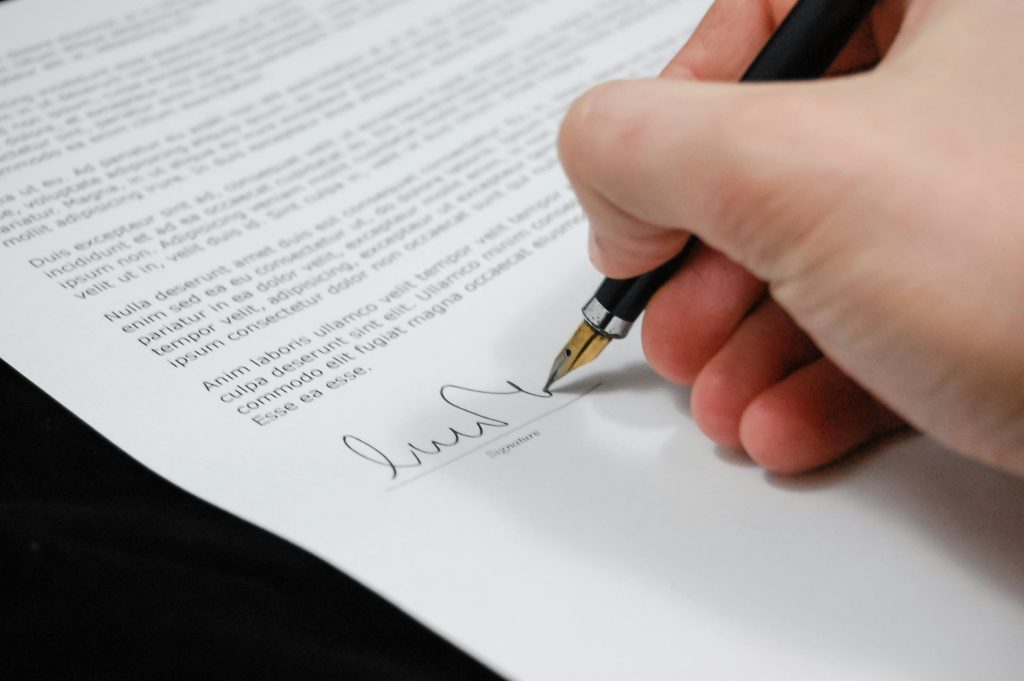
5. Signing the agreement
When all the details are in place and approved, the actual signing can take place. This is normally done digitally or at a meeting in person at the estate agent’s or a law firm’s office.
| Key steps in signing the purchase agreement: |
|---|
| Making an offer |
| Negotiations |
| Drafting |
| Review |
| Signing |
By following these steps, you ensure a thorough approach to your property purchase and reduce the risk of unpleasant surprises.
Legal checklist for property transactions
A careful legal review is essential when you are facing a property transaction. Here are five critical points to double-check:
1. The property’s condition and documentation
Make sure you get all the necessary documentation on the property’s condition. This includes the condition report (tilstandsrapport), the electrical installation report (elinstallationsrapport) and any easements (servitutter) or encumbrances on the property.
2. Financing approval
Double-check with your bank that your financing has been approved before you sign the purchase agreement. Without this certainty, you could find yourself in an awkward position later in the process.
3. The details of the purchase agreement
Go through all the terms and conditions of the purchase agreement thoroughly. Pay attention to the price, payment deadlines and any special conditions such as a lawyer’s reservation.
4. Tax obligations
Check the tax implications of the purchase, including property value tax (ejendomsværdiskat) and land tax (grundskyld), so that there are no surprises after the handover.
5. Change-of-ownership insurance
Consider the benefits of change-of-ownership insurance (ejerskifteforsikring), which can cover hidden defects after the handover of the home – it can save you major expenses later on.
By keeping an eye on these points, you protect yourself against legal pitfalls and get your new chapter as a homeowner off to a secure start.
Pitfalls in property transactions and how to avoid them
When you buy or sell property, there are several pitfalls that can cost you dearly. By being aware of them and working with a competent estate agent, you can steer clear of the problems.
Underestimating market analysis
A common mistake is to underestimate the importance of a thorough market analysis. It is important to know the state of the market so you do not sell or buy at an unfavourable price. Work with your estate agent to gain insight into current trends, and be realistic about what the home is worth.
Not reviewing the details of the contract
Many buyers overlook important details in the purchase agreement. This can result in hidden costs or unexpected conditions later on. Make sure that both you and your lawyer go through the document carefully. Ask your estate agent if anything seems unclear – it will spare you unpleasant surprises after signing.
Hasty decision-making
It can be tempting to snap up a good offer straight away, but hasty decisions often lead to bad investments. Take time to think things through carefully, especially if the contract contains complex terms. Discuss any concerns with your advisers before making a final decision.
By working actively with your estate agent, you gain a better understanding of the process and the chance to spot potential problems in good time.
Protecting your home purchase with reservations
Buying a home can be a complex process, but by including reservations (forbehold) in the purchase agreement, you can protect yourself against unwelcome surprises. A reservation acts as a safety valve, allowing you to withdraw from the agreement without financial consequences if the conditions are not met.
Lawyer’s reservation
One of the most common reservations is the lawyer’s reservation. It gives your lawyer time to go through the purchase agreement and make sure all the legal aspects are in order. If the lawyer finds anything problematic, you have the right to cancel the sale within the stated time frame.
Financing reservation
This reservation (finansieringsforbehold) means you are only bound by the purchase if your financing falls into place. In other words, if the bank or the mortgage credit institution (realkreditinstitut) does not approve the loan on the agreed terms, you can withdraw without penalty.
Right of withdrawal
Although the law already gives you a general right of withdrawal of six working days after signing the purchase agreement, in return for a small fee (usually one per cent of the purchase price), special circumstances may call for additional specific conditions.
By carefully considering and using the relevant reservations, you gain better control over your home purchase and avoid potential risks. These safeguards are important tools in any property transaction and provide peace of mind throughout the process.
Leave a comment