
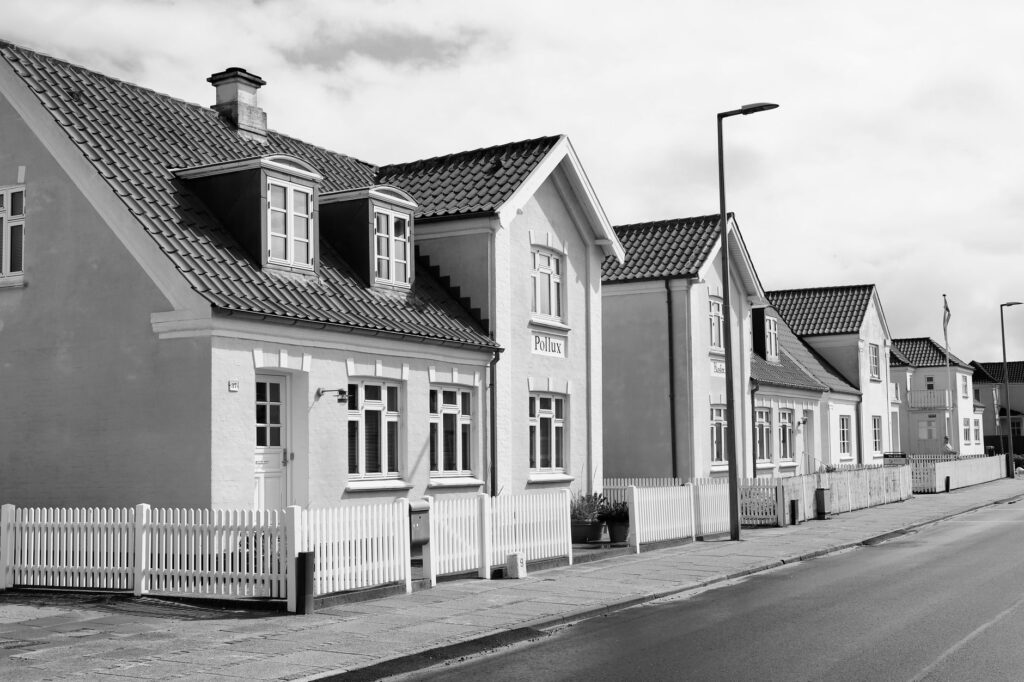
Take a look at the housing market in Odense in 2026 here and get a clear picture of what is happening right now. The figures come from Boligsiden, Finans Danmark and Danmarks Statistik (Statistics Denmark), cover Odense only and use fresh quarterly data. You can trust the prices per square metre for both houses and owner-occupied flats.
See the latest price developments over the past year, how long homes are typically for sale, and how much the price is normally pushed down. You also get an overview of what it costs to sell a home in Odense, set against Brikk's fixed fee and placed in a local context.
Odense is a large student city with a strong hospital and robotics cluster. The first phase of the light rail opened in 2022 and makes it easier to get around. That lifts demand for homes. Here you get current prices, market developments, the pace of the sales process with time on the market and reductions, which areas attract the most interest, and what it really costs to sell your home.
Current prices per m² for houses and owner-occupied flats in Odense
The price per square metre for houses in Odense in the first quarter of 2026 was around 22.500 kr./m² (source: Boligsiden Markedsindblik: Kommunetal). Preliminary figures for the second quarter point to a small increase. The figures are conservative and may be adjusted as more sales are included.
For owner-occupied flats the price in the same period was approximately 28.000 kr./m² (Q1 2026, source: Boligsiden Markedsindblik: Kommunetal). The median is used here so that individual very expensive or cheap homes do not skew the picture, which gives a more accurate impression of the market.
Prices vary by type of house. Terraced houses typically fall between 18.000 and 24.000 kr./m² (25th-75th percentile, Q1 2026). Detached houses range more widely, approximately 20.000 to 27.000 kr./m² (source: Boligsiden municipal breakdown, Q1 2026).
Boligsiden's figures are based on registered sales with a delay of approximately four to eight weeks from sale to registration, so the price levels reflect the market with a slight lag (Boligsiden methodology description, last updated June 2026).
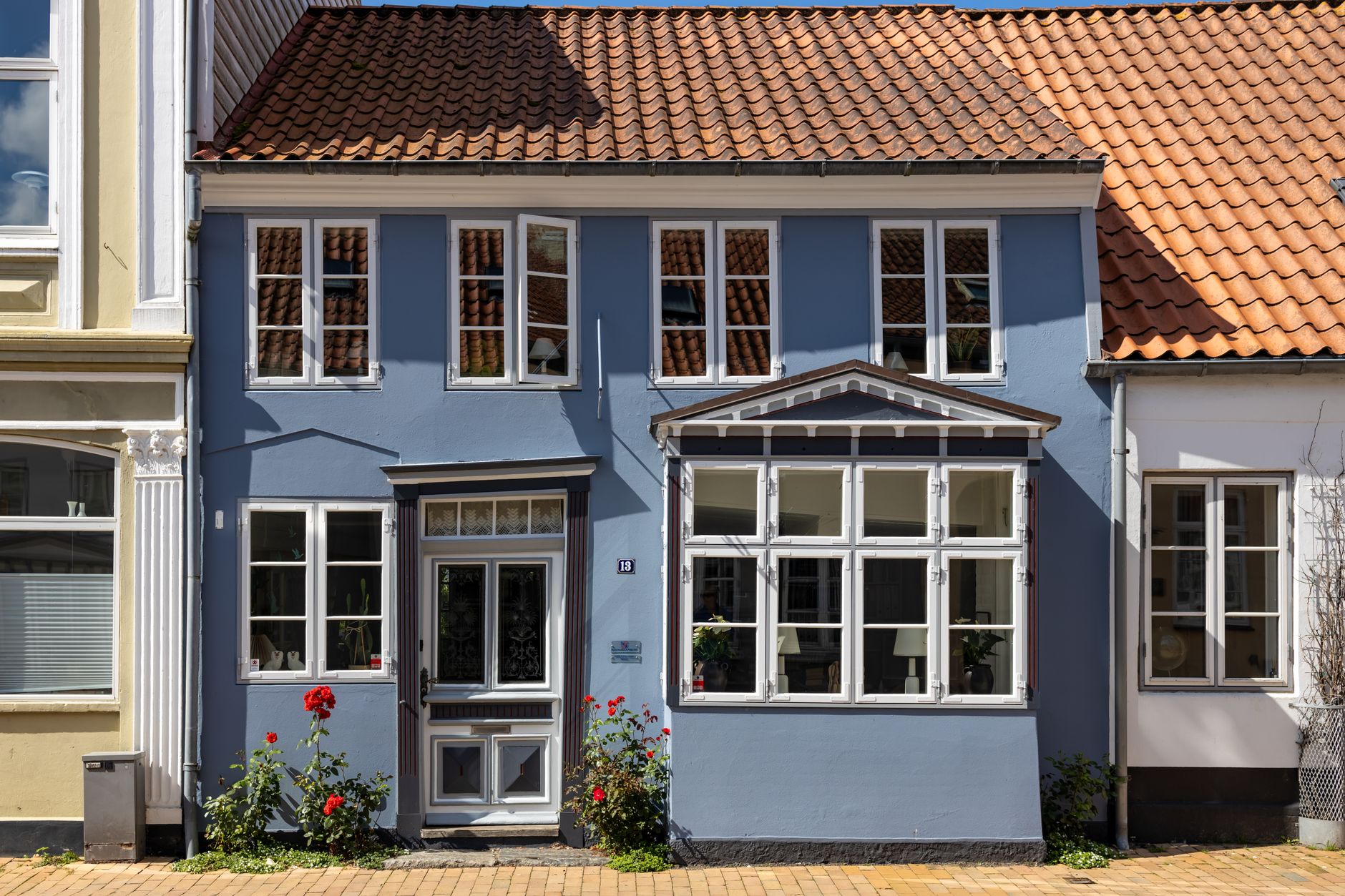
Price developments in Odense over the past year, in percentage terms
Odense has picked up over the past year. From April 2025 to April 2026, house prices rose approximately 2,3 % according to Boligsiden's municipal report. Owner-occupied flats were more uneven and ended at around 1,8 % in the same period, based on Finans Danmark's municipal extract. A three-month moving average gives a calmer picture, because the monthly jumps can be large.
Compared with the rest of Region Syddanmark, Odense is slightly ahead. The region as a whole had approximately 1,7 % for houses, while owner-occupied flats only reached around 1 %. So Odense pulls the average up in the area.
Take a standard detached house of 120 m² with a price per m² of approximately 22.500 kr. A two per cent rise gives an increase in value of around 54.000 kr. The calculation is 120 m² × 22.500 kr. × 0,02. Both buyers and sellers will notice that.
Prices fluctuate from month to month because of seasonal and market factors. The most accurate overview comes from looking at changes over a whole year rather than short jumps up or down. The sources' methodology descriptions point in the same direction.

The pace of the market in Odense: time on the market and typical reductions
In Odense it took an average of around 65 days to sell a house in the first quarter of 2026, according to Boligsiden. That is a little over two months for a detached or terraced house.
For owner-occupied flats the average time was around 55 days in the same period, measured at municipal level. Flats often change hands faster than houses, but location and condition affect the pace considerably.
The gap between asking price and sale price is typically around 4 % in Odense (Boligsiden Q1 2026). So buyers often get the price pushed down by a few percentage points from the starting price. Not dramatic, but noticeable on the bottom line.
The spread is large. The middle part of the market (25th-75th percentile) lies at around 40 to 90 days for both houses and owner-occupied flats (Boligsiden Q1 2026). Some homes sell quickly, while others take several months.
As an example, say your house is priced at 2,5 million kr. With a typical reduction of four per cent, that comes to around 100.000 kr. The calculation is 2.500.000 × 0,04 = 100.000 kr. A reduction of that size is common when the deal is being agreed.
Where buyers want to live in Odense right now
If you dream of a classic detached house on a large plot, Hunderup is hard to look past. The area is close to both woodland and the city centre, so you get nature and city life on your doorstep. Homes sell quickly, and time on the market is often shorter than in the rest of Odense, which says something about demand.
Skibhuskvarteret lies north-east of the city centre and blends the charm of master-builder villas with newer buildings. The strong retail along Skibhusvej brings life to the street with shops and cafés, and that rubs off on the housing market. Prices range more widely than in Hunderup, but the area is still at the expensive end, with stable sales over the past year.
Dalum and the stretch along Sdr. Boulevard appeal especially to families. You get quiet residential streets close to the river and woodland, as well as good schools nearby. Light rail stops in the area make transport easy, so trips to the centre and other districts are short. It is a practical combination when everyday life is busy.
Bolbro and Tarup offer more affordable options than the central neighbourhoods such as Hunderup. Here there are mostly terraced houses and single-storey detached houses, which suit first-time buyers or families on a fixed budget. The motorway and the light rail to the west make the area attractive to commuters. Time on the market is often slightly longer than the municipal average, but the price level makes up for the wait.
Popular neighbourhoods change with developments in infrastructure, supply and local amenities. Check the latest data for Odense in Boligsiden's area profiles (updated June 2026) for the most current overview.
What it costs to sell in Odense compared with Brikk
You now have a good overview of Odense's housing market, with figures for prices per square metre, price developments, time on the market and typical reductions. But what does it cost to sell in Odense? Local estate agents often take 1,0 – 1,5 % of the sale price as a fee plus a marketing package. At chains such as Nybolig and EDC, the brokerage commission is typically 25.000 – 35.000 kr., and marketing often costs 10.000 – 15.000 kr., depending on the package (source: local agents' fees, checked June 2026). On top of this come photos at approximately 3.000 – 5.000 kr. as well as a condition report and energy label at a combined 8.000 – 12.000 kr.
Worked example at a sale price of approximately 2,5 million kr.:
-
Fee (1,0 – 1,5 %) = 25.000 – 37.500 kr.
-
Marketing = approx. 10.000 – 15.000 kr.
-
Photography = approx. 4.000 kr.
-
Condition report + energy label = approx. 10.000 kr.
That typically adds up to total costs of approximately 49.000 to 66 – 67.000 kr. for a traditional sale through a local agent.
Brikk's fee is fixed and transparent. It costs 29.900 kr. regardless of the size or price of the home (source: Brikk price list/FAQ, June 2026: https://brikk.dk/priser). That often means a large saving compared with a percentage-based fee, especially if you choose several add-on services from the local agent.
At a sale price of approx. 2,5 million kr. you typically save around 20 – 30.000 kr. with Brikk compared with the classic model of a percentage fee plus extra charges. It depends, of course, on which services you want included, e.g. photos.
If you want to see current homes and price levels in Odense, take a look here: https://brikk.dk/til-salg/odense. The page gives concrete examples from the market and good inspiration without pressure.
Leave a comment