
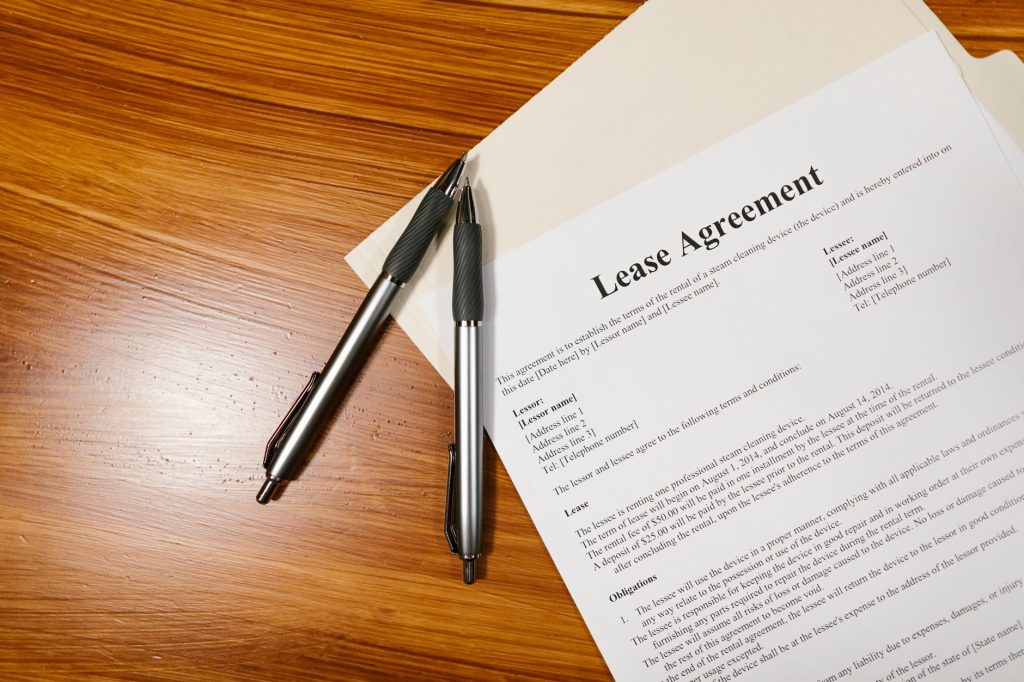
If you let out a home all year round that you do not live in yourself, the tax-free basic allowance (bundfradrag) does not apply. It only applies when you let a room in your own home, let your own home for part of the year or let your holiday home. When you let an entire home all year round, the rental income is taxed as personal income under the ordinary rules. You add up your income and deduct the running costs that qualify for a deduction. Interest on loans for the home belongs under capital income and is deducted there.
Here is a simple walk-through of the difference between three forms of taxation: ordinary taxation of year-round letting, the capital return scheme (kapitalafkastordningen) and the business tax scheme (virksomhedsordningen). You also get references to official sources. The aim is for you to get to grips with tax on rental income from year-round letting and feel confident about the rules. The focus is on one home that you do not live in yourself, and not on short-term letting such as Airbnb.
You also get practical help with where to report the rental income in your annual tax statement (årsopgørelse), which records you should keep for at least five years, and how to choose a scheme in your tax return (oplysningsskema). That puts you in a stronger position with the Danish Tax Agency (Skattestyrelsen) and in your discussions with advisers.
How to calculate personal income from year-round letting
Start by adding up all payments from the tenant. That is your gross rent. It includes the rent and any payments on account for heating or water, if you collect them and settle the bills yourself. Know the difference between income you keep and amounts that simply pass through to the utilities.
From the gross rent you deduct running costs, which reduce your personal income. These include property tax and common charges to the owners’ association (ejerforening) or similar. Ongoing maintenance counts too, meaning repairs and servicing that restore the home to the same condition without raising the standard. Insurance on the property and administration costs are also deductible.
Interest on home loans does not count as a running cost. It forms part of your capital income and is treated separately.
Depreciation often causes confusion. Residential buildings cannot be depreciated for tax purposes. White goods and other installations in a let owner-occupied flat or a one- or two-family house cannot be depreciated either. If you replace them, the rules on maintenance and improvement determine how much you can deduct.
Maintenance is not the same as improvements. Maintenance can be deducted straight away, because the work restores the original condition. Improvements raise the standard or the value and are treated differently for tax purposes.
If you buy the property partway through the year and let it the same year, both rental income and expenses must be calculated proportionately for the period in which you own and let the home.
Electricity, water and heating: if the tenant pays the utility company directly, you have no income from it. If you collect payments on account and pass the money on to pay the bill, the net amount must appear correctly in your accounts, with documentation.
Keep all records of income and expenses for at least five years after the end of the year. The Danish Tax Agency can ask for documentation during that period.

Which expenses can you deduct as a landlord?
If you let all year round, you may deduct several expenses in your accounts and reduce your taxable income. Property tax, also known as land tax (grundskyld), counts as a running cost. So do common charges or owners’ association contributions, when they cover the running of the specific home you let. These include, for example, a caretaker, cleaning of shared areas and joint insurance.
Maintenance is key. Painting walls, repairing white goods or replacing faulty fittings are all deductible. Always keep invoices and take before-and-after photos, so the purpose is documented for the Danish Tax Agency. Improvements are a different matter. If you put in a new kitchen of a higher standard than before, or make the bathroom bigger, you do not get an immediate deduction, but it can affect the value when you sell later.
Insurance on the property is also deductible. This covers standard buildings insurance and relevant policies for the period. Administration usually costs money, and you may include those expenses: fees to a managing agent or property service company, advertising for new tenants, debt collection fees and bank charges on the account used for the letting.
Interest on home loans is treated differently. It does not count as a running cost but is entered under capital income.
Small purchases such as smoke alarms, extra copies of keys and minor necessary replacements can often be deducted straight away as maintenance. Keep the receipts and jot down what each purchase covers.
A quick overview of typical deductions when letting a home:
-
Property tax (land tax)
-
Common charges/owners’ association contributions, incl. running costs and caretaker
-
Ongoing maintenance, e.g. painting and repairs
-
Insurance premiums relating to the property
-
Administration costs, e.g. managing agent fees
-
Advertising and credit check costs
-
Debt collection costs and bank charges on the rent account
-
Small purchases such as smoke alarms and key copies

Maintenance or improvement: how to make sure your deductions hold up
Tax deductions depend on whether an expense is maintenance or an improvement. Maintenance restores the home to its previous condition. Examples include sanding floors or fixing a leaking drain trap. You deduct those expenses straight away in your accounts.
Improvements raise the standard or the capacity. If you replace laminate with solid oak, or build a balcony, it does not count as ordinary maintenance. Those expenses do not belong in the running costs and only become relevant when you sell, as you calculate tax on any gain.
The line between repair and replacement often causes doubt. If you replace a fitting with one of the same quality, it normally counts as maintenance, which you deduct straight away. If you choose a more expensive model or a better material than before, it becomes an improvement. Ask the tradesperson to split the invoice, and get before-and-after photos. That makes it easier to prove.
Jobs involving both maintenance and improvement need a clear split. Think of a renovation where some things are simply repaired while others are upgraded to a higher standard. Here the contractor should give a written breakdown on the bill for each part of the work, so you can easily avoid disputes with the Danish Tax Agency.
Timing matters. Major renovations shortly after the purchase are often assessed as improvements. Small repairs spread over several years, together with clear documentation of wear and tear, point towards maintenance.
White goods follow the same principle. Repairs are maintenance. If you replace an appliance with a more expensive model than the old one, the extra cost is assessed as an improvement. Ask the supplier to split the invoice.
Damage caused by a tenant counts as maintenance when you put it right. The deposit can be used to cover those costs.
Make it a routine to take photos before and after every job. Keep descriptions of the materials together with the invoices for at least five years, so the documentation is ready if the Danish Tax Agency asks.
The capital return scheme moves part of the profit to capital income
When you let a home, the capital return scheme (kapitalafkastordningen) moves part of the profit from the letting over to capital income. That part corresponds to a calculated capital return and is taxed as capital income instead of personal income. This helps especially if your marginal tax rate on personal income is high, because capital income is often taxed at a lower rate.
To calculate how much is moved, you use the capital return basis (kapitalafkastgrundlaget). This is the value at the start of the year of the assets used solely for business purposes. Typically, that is the value of the property. Under the capital return scheme, debt is generally not deducted. Calculate the value correctly according to the official guidelines, so the Danish Tax Agency does not raise questions.
The Danish Tax Agency publishes the capital return rate every year. For the 2026 income year it is 2 %, unchanged from 2025. Always check the rate for the income year you are reporting for.
You need a simple set of accounts that clearly shows the year’s result and the capital return basis. It can be basic, but you must be able to document the figures.
Under the capital return scheme, interest on loans is still deducted from capital income. The scheme moves some of the profit from personal income to capital income, but does not change the interest deduction.
You make the choice in the tax return in TastSelv (Skat’s online self-service system) before the deadline. Whether the scheme makes sense depends, among other things, on the rest of your tax position. If your marginal tax rate is low, the effect will be small.
The business tax scheme gives the full value of your interest deduction and the option to retain profits
For rental properties, the business tax scheme (virksomhedsordningen) gives the full deduction value of interest expenses. Interest on the debt that forms part of the business is deducted from the business’s profit. It therefore reduces your personal income instead of your capital income. This often improves liquidity and removes several of the usual limits on interest deductions.
You can also retain profits in the business by paying a provisional tax to the state, so you do not have to withdraw the whole year’s profit privately straight away. The provisional business tax is 22 %, the same as corporation tax. This makes room for more flexible financial planning.
If you want to use the scheme, you must keep separate accounts that meet the requirements of the Danish Bookkeeping Act (bogføringsloven) and, among other things, calculate a contribution account, an account for retained profits and a return basis. The rules on the order of withdrawals must be followed closely. All the business’s assets and debts must be included in the scheme, so private finances and the business are kept apart through separate bank accounts and clear bookkeeping. If you have several properties or high borrowing, the advantage often grows. A single property with low debt usually has less effect.
Get help from an accountant or other professional when you start and as the scheme runs, especially if you have several properties, different loans or other complex circumstances.
The choice is made in the tax return in TastSelv before the deadline. The Danish Tax Agency has guidance on the technical requirements and the correct procedures, so you avoid mistakes in the order of withdrawals or incorrect treatment of private spending.
Worked example for an owner-occupied flat: the difference with and without the capital return scheme
Imagine a 2-room owner-occupied flat let for 10.000 kr. a month. That gives 120.000 kr. a year in rent. The running costs are about 4.000 kr. a month for property tax, common charges, insurance, maintenance and administration. That is 48.000 kr. a year.
The interest on the loan is around 3.000 kr. per month, i.e. 36.000 kr. a year.
Under the ordinary rules, the calculation looks like this: rental income of 120.000 kr. minus running costs of 48.000 kr. gives a profit of 72.000 kr. This is taxed as personal income. Interest expenses of 36.000 kr. belong under capital income and are deducted there, not together with the running costs.
With the capital return scheme, you move part of the profit over to capital income, which is often taxed at a lower rate if your personal income is high. The capital return is calculated by multiplying the capital return basis, i.e. the value of the home at the start of the year with no deduction for debt, by the rate the Danish Tax Agency sets for the year. For the sake of the example, assume the capital return basis is 1.000.000 kr. With the 2026 rate of 2 %, that gives a capital return of 20.000 kr. The 20.000 kr. is taxed as capital income. The rest of the profit, 52.000 kr., is taxed as personal income. The interest is still deducted under capital income. Your total tax depends on the rest of your finances.
The business tax scheme gives the full value of your interest deduction and the option to retain profits against a provisional tax, but requires more advanced accounts. The example here only shows the main points for interest and the split of income.
Here is a quick overview per month:
| Item | Amount per month (kr.) |
|---|---|
| Rental income | 10.000 |
| Running costs | -4.000 |
| Interest expense | -3.000 |
| Profit before interest | +6.000 |
On an annual basis:
-
Rental income: 120.000 kr.
-
Running costs: -48.000 kr.
-
Profit before interest: +72.000 kr., taxed as personal income without a scheme, or split between personal and capital income under the capital return scheme
-
Interest: -36.000 kr., deducted under capital income unless you use the business tax scheme
Keep all records, contracts and receipts for rental income and expenses for at least five years. Check the Danish Tax Agency’s rates and rules every year, especially when choosing between ordinary taxation and schemes such as the capital return scheme.
Report the rental income correctly in your annual tax statement, in the right boxes
When rental income from year-round letting goes into your annual tax statement, you must first choose the tax scheme you use. If you follow the ordinary rules without any special scheme, the net result from the letting is personal income. You enter the profit in box 111 of the tax return (a loss in box 112), and you move the interest on the loan for the home from box 41 or 42 to box 117. The interest expenses still belong under capital income. Also enter the number of days the home was let in box 207, so you do not pay property value tax for the period it is let. If you use the capital return scheme, you split the amount: the capital return goes to capital income, the rest to personal income.
If you choose the business tax scheme, you report through the tax return (oplysningsskemaet, the extended tax return) in TastSelv. It has fields for withdrawals, retained profits and interest, among other things. You need to follow the Danish Tax Agency’s step-by-step guides for the extended version.
Always check the Danish Tax Agency’s official guidance each year. It gives the exact box numbers for your scheme and for the current income year, so you do not get the tax return wrong. The deadline for the tax return is 1 July, while the deadline for correcting the ordinary annual tax statement is normally 1 May, so keep an eye on the year’s deadlines. Ideally, submit via TastSelv for secure registration.
Keep all relevant records for at least five years after the end of the year. This applies to tenancy agreements, receipts for running costs and maintenance, bank statements and documentation of payments to utility companies. If improvements have been made rather than maintenance, this must be shown clearly and separately.
If you want to switch schemes, for example opting in or out of the capital return scheme or the business tax scheme, the choice applies to the whole income year and is made in that year’s tax return. You can change your choice until 30 June in the second calendar year after the income year. Be aware of opening and closing statements if they become relevant. Also review your preliminary income assessment (forskudsopgørelse) regularly, so your provisional tax matches the expected profit and interest. Enter the figures directly in TastSelv under Forskudsopgørelse.
Quick checklist:
-
Check the Danish Tax Agency’s guidance on boxes every year before you report
-
Submit the tax return via TastSelv before the deadline
-
Keep the tenancy agreement, invoices/receipts and documentation for maintenance and improvements for five years
-
Remember the special rules when switching between tax schemes (capital return/business tax scheme)
-
Update your preliminary income assessment regularly with realistic figures
Next steps for newly acquired rental properties and longer tenancies with no tax-free allowance
If you buy a rental property to let all year round, the tax-free allowance does not apply. You must therefore calculate the net result as personal income, with a deduction for operating costs but no automatic tax-free amount. Costs of the purchase itself, such as tinglysning (registration of title) and conveyancing, are not deducted year by year but are added to the acquisition cost under the rules on property gains in section C.H.2 of Den juridiske vejledning (the tax authorities’ legal guide).
Be aware of a limit for newly acquired properties. According to the practice of the Danish Tax Agency (Skattestyrelsen), in your first three years of ownership you can deduct refurbishment costs of no more than 25% of the annual rental income for a let owner-occupied flat and 35% for a let single-family or two-family house. If you let the home for at least 12 months, the Danish Tax Agency treats it as commercial letting. The taxation is the same as described above, and here too there is no tax-free allowance.
Keep simple accounts from day one. Make a monthly overview of income, operating costs and interest, and reconcile it regularly against your bank accounts. Keep all receipts and documentation for at least five years. Before you fill in your tax return (oplysningsskema), you should look up the current capital return rate, check the rules on retained profits under the business tax scheme and find the exact box numbers on skat.dk, for example under “virksomhedsordningen” (the business tax scheme) and in Den juridiske vejledning C.C.5.
The choice between the capital return scheme and the business tax scheme depends on your finances. The capital return scheme is often a good fit if you pay a high marginal tax rate on personal income. The business tax scheme is typically relevant if you have larger debts, higher interest costs or several properties combined. Make sure you have a clear tenancy agreement that sets out who is responsible for utilities and maintenance, because this affects your accounts.
Check the Danish Tax Agency’s official sources every year before you file your return. That keeps your tax calculation and documentation correct going forward.
Leave a comment