
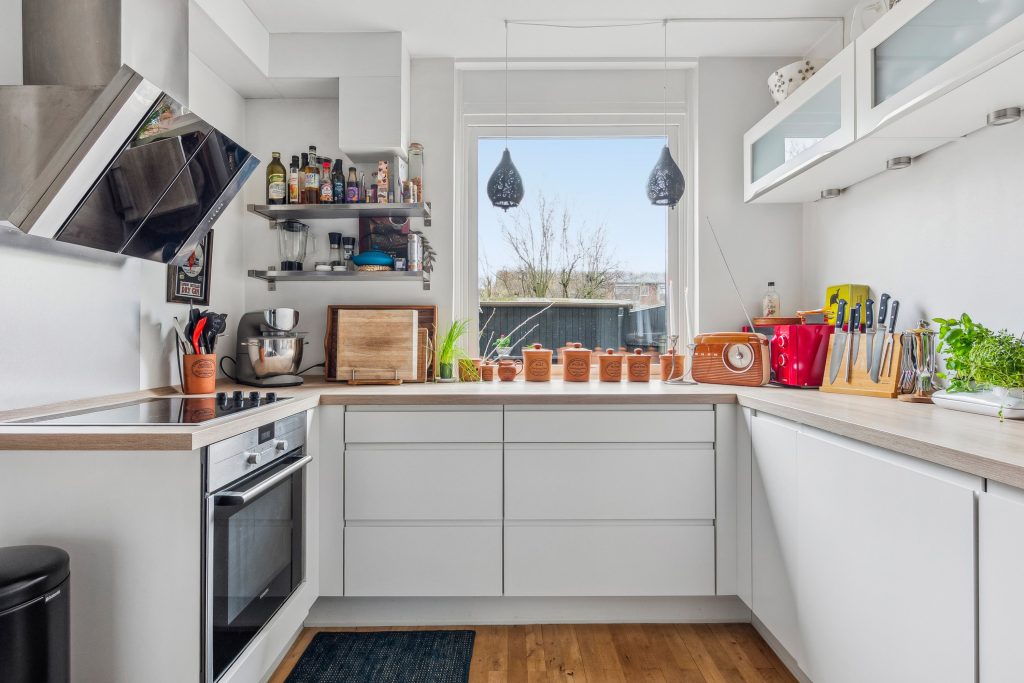
Getting your home ready for sale is about more than putting a “for sale” sign in the garden. It is a process in which the right styling can play a decisive role in the buyer’s first impression, and therefore in the sale.
When you invest time and resources in styling your home, you make it more attractive to potential buyers. A well-styled home feels more inviting and can help them picture their life there. This can lead to more interested buyers, a quicker sale and even higher offers.
Imagine a property put on the market without any styling at all – perhaps cluttered, very personal or with dated décor. Compare it with a home that has been professionally styled: a neutral colour palette, modern furniture and simple decoration. The difference is striking! Buyers are usually drawn to the harmonious setting of a well-styled home.
A concrete example might be Ida from Århus, who sold her flat after just two weeks on the market – something she had never expected – but thanks to the professional styling, her rooms looked larger, with more light and a minimalist interior. Not only did it attract interest from more buyers, it also resulted in a sale price above her original expectations.
So styling is not just about aesthetics; it is also a smart financial investment. Although it takes a little upfront capital if you hire furniture or decorative items, experience often shows that this investment pays for itself many times over through a higher property value.
Start with cleaning and decluttering
The first step in styling your home is to tackle the cleaning and decluttering. A thorough going-over can work wonders for the first impression potential buyers get. Take a systematic approach: do one room at a time so that you don’t feel overwhelmed.
Use effective cleaning methods: vacuum the carpets thoroughly, wash the windows to let the light pour in, and make sure you dust every surface. Don’t forget the small details such as light switches and door handles – clean details add up to the overall impression of a well-kept home.
Decluttering is about more than just putting things away. Consider storage solutions that make the most of the space, such as wardrobe organisers or under-bed boxes for things you use less often. This not only helps keep the home neat but also makes the rooms look bigger.
A tidy atmosphere feels both calm and inviting to visitors. It makes it easier for them to picture their own belongings in the room without being distracted by clutter or personal items.
To keep up this look until the sale, it is important to establish a daily routine. Do a quick round every morning – empty the bins, wipe down the tables and air the rooms so that everything feels fresh when potential buyers come to visit.
Create a neutral atmosphere with your décor
A neutral colour palette and a minimalist interior can work wonders for your home when it is up for sale. By choosing neutral colours such as beige, white and grey, you create a timeless look that appeals to many potential buyers. These colours act as a blank canvas on which visitors can more easily picture their own lives.
The advantage of neutral colours is not just their versatility; they also have a calming effect on a room. A light beige wall combined with white furniture can make even small rooms feel larger and more open. Shades of grey add depth without dominating the room or drawing attention away from the home’s architectural details.
Minimalist interiors are all about simplicity and functionality. By keeping the furnishings simple, you avoid overcrowded rooms while achieving an elegant style. Think clean lines and multifunctional furniture that makes the most of the space – a sofa bed or a folding dining table, for example.
Small details also make a big difference to the styling without breaking the simplicity you are after. Use artwork in muted tones or with abstract motifs to add subtle character. Plants make perfect additions, as they bring life into a room without visual clutter – try small potted plants on shelves or floor-standing plants in the corners, for example.
With this approach, your home gets a modern yet inviting feel in which any buyer can see the potential to personalise it to their own taste.
Use professionals to style your home
When you are thinking about selling your home, it can be a big advantage to hire professional stylists. Their expertise in interior design and aesthetics can really make a room shine and bring out the best in your home.
Professional stylists have a trained eye for detail. They know exactly which features to highlight and how to make the most of a room’s potential. Drawing on their experience, they can create a coherent and inviting atmosphere with broad appeal to potential buyers.
Although hiring a stylist may seem like an extra expense, it is worth weighing the cost against the added value. Professional styling can often lead to higher offers on your property and so more than pay for itself in the end.
Think, for example, of small changes such as rearranging the furniture for a better flow through the room, or choosing the right lighting to make it warmer and more inviting. Professionals also know how to add modern touches without a big outlay – perhaps simply by adding new cushions or throws in on-trend colours.
Their work results not only in a visually attractive home but also in a higher perceived value among buyers, which can quickly speed up the sales process.
Balancing furniture and space in your interior
Finding the right balance between the size of the furniture and the dimensions of the room is crucial to creating a harmonious home. When choosing furniture, you should consider both function and aesthetics, but above all how it fits into the room in question.
Large furniture can quickly make a small room feel overcrowded, while furniture that is too small for a large room is easily “swallowed up” by its surroundings. That is why it is important to find a balance in which every piece plays its part without dominating.
The principles of spaciousness are about moving freely through the room. So make sure there is enough space to get around your furniture comfortably. Think about the flow – from living room to dining room, or from kitchen to hallway – so that there are no bottlenecks or obstacles.
The placement of your furniture should also highlight the room’s best features. If you have large windows with a lovely view, placing the sofa cleverly can make sure the view is enjoyed to the full – while daylight can still flow freely into the room.
Another key factor is symmetry and proportion: use pairs of chairs around a table for a balanced feel, for example, or arrange bookcases evenly on either side of the fireplace for visual harmony.
When all of this comes together, the result is not just a stylish setting but also a more inviting atmosphere that makes it easy for potential buyers to picture themselves living in your home.
Photography: capture the best angles
When you photograph your home for sale, perspective and choice of angle play a central role in how the rooms are presented online. It is about highlighting the home’s strengths and creating an inviting atmosphere that catches potential buyers’ attention.
Begin by finding the right angles, using the room’s architectural details as your guide. Large windows are a good example of an asset that the right angle can enhance. By shooting from a low position, you can make the windows look larger and maximise the natural light streaming in.
Fireplaces are also attractive focal points. Here you could try a slightly diagonal angle to add depth and put the warmth of the fireplace at the centre of the picture. Think about how the shadows fall; they often add extra dimension to the picture without any need for editing.
Small adjustments to the camera’s position can really change how a room comes across in pictures. For example, try taking a few steps back or getting a little higher up – perhaps standing on a chair – to get a better overview of the whole room. These small changes help create space and balance in the shot.
Remember the importance of symmetry too; if harmony is your goal, make sure the lines between the furniture and the walls are straight within the frame. This makes the pictures more visually pleasing.
If you use these techniques consistently, your property photos will not only look professional but will also be inspiring enough to engage potential buyers quickly.
Natural light and the right time of day
When you are planning to photograph your home, natural light is your best friend. The sun’s rays can bring a warmth and clarity to your photos that artificial lighting cannot match. It is all about finding the perfect time of day to capture the home in its best light.
Morning light, just after sunrise, often casts soft shadows and gives the rooms a warm glow. This is the ideal time to bring out the details in woodwork or finely textured furniture. If your home has east-facing rooms, they will benefit from this early light.
In the afternoon, especially around the “golden hour” – the last hour before sunset – the light takes on a golden tone and casts long shadows. This can create a dramatic effect in rooms with large windows or open-plan areas such as west-facing living rooms and kitchens.
Different lighting conditions also affect the mood of the picture: overcast days spread the light evenly without harsh shadows, which often results in more uniform images with no overexposed areas. On days like these, you can shoot all day without worrying about direct sunlight.
The position of the sun has a big impact on the quality of your photos. Direct sunshine in the middle of the day can cause harsh contrasts and unwanted reflections, so you should avoid this time of day for indoor photography.
To make the most of natural light from different directions, open the curtains fully and remove anything in front of the windows to let in as much light as possible. Also consider placing mirrors strategically opposite light sources – this helps reflect the light around the room and emphasises its depth and size.
If you use natural light deliberately, your property photos will have an authentic feel while showing the home in the most flattering way.
Professional equipment ensures sharp images
When you want to take impressive photos of your home, the right camera equipment can make a real difference. Professional cameras with advanced lenses and sturdy tripods help ensure the best image quality.
Start by considering which type of lens suits the different rooms in your home. A wide-angle lens is ideal for interior shots, as it captures more of the room in a single frame and makes small rooms look bigger and more open. For detail shots, or to highlight special features such as artwork or decorative details, a macro lens can be useful.
Tripods are indispensable for both indoor and outdoor photography. They provide stability, eliminating the risk of blurred images caused by camera shake. This is especially important in low light or with long exposure times, where even small movements can affect sharpness.
The difference between amateur photos and those taken with professional equipment is often obvious in the level of detail and clarity. Amateur shots often lack the depth and precision needed to make a room really shine online.
Professional camera settings such as manual focus and exposure control also help you adjust the lighting precisely to suit each room. This ensures natural colours with no overexposure or dark corners.
With professional camera equipment, your property photos will not only look better – they will also feel more inviting to potential buyers viewing them online.
More potential buyers with 3D tours
When you sell your home, a 3D virtual tour can be a decisive tool for attracting more potential buyers. The technology lets interested buyers explore the property on their own, as if they were physically walking through the rooms.
A 3D tour lets you present your home in more detail than traditional photographs. Buyers get more than a superficial glance; they can dive into the details and discover everything from room sizes to the quality of the materials. This interactive element creates a deeper connection between the home and the potential buyer.
The technology works by scanning the entire home with specialised cameras that capture every angle and dimension of the rooms. These images are then assembled into a virtual model that users can navigate freely on their computer or smartphone.
A big advantage of 3D tours is the flexibility they give buyers. They don’t have to worry about open house schedules or geographical distance – they can experience the home whenever and wherever they like.
There are many success stories in which 3D tours have played a key role in a quick sale. For example, a couple in Copenhagen chose to offer virtual tours of their flat during the sales process. This led to more online views than expected and quickly brought in several offers on the flat.
By adopting this modern technology, you take a step further towards selling your home efficiently, while also making sure it is presented at its best to as many interested buyers as possible.
Drone services show off the home’s surroundings
When you want to give potential buyers a comprehensive picture of your property’s location, drone photography can be a powerful tool. Drones let you present not only the home itself but also its surroundings, in a way that would otherwise take several visits and in-person viewings.
Drone images give a whole new angle on the property by capturing it from above. This perspective highlights not only the architecture of the house but also its location in relation to nearby amenities such as parks, woods or viewpoints. Drone footage can, for example, show the paths in a nearby park or the distance from your terrace to the water.
In urban areas, a drone can reveal how close the home is to public transport, shops and other key amenities. In rural areas, it can highlight the scenic surroundings and the rural idyll around the house. This visual context helps buyers better understand the advantages of this particular location.
Drone footage is also particularly effective at conveying a sense of space around the property. If your home has a large garden or is close to open countryside, aerial images can show off these qualities clearly.
This technology often increases a property’s sales potential considerably, as it offers a more complete picture of both the home and the local area. This makes it easier for buyers to picture their life there – whether that means morning runs in the park or barbecues overlooking the countryside.
So by making active use of drone services, you get more than attractive pictures; you also give interested buyers all the information they need to make their decision more easily.
Leave a comment