
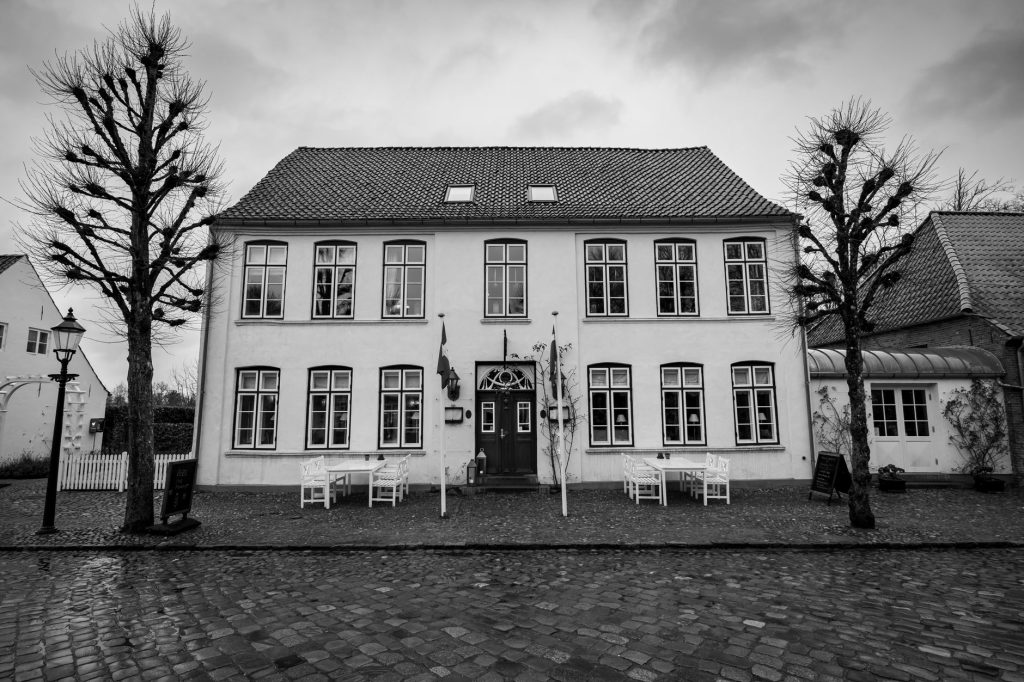
A house from 1965 with a new roof and new windows is typically priced higher than a house from 1985 where nothing has been touched. The year of construction rarely moves the price on its own. What makes the difference is documentation of when the roof, windows and installations were last replaced. When it comes to a home’s age and price, look past the year on the title deed and focus on the paperwork behind the maintenance.
Buyers look at the documentation, not at the story. Receipts and dates for the roof, windows and installations carry a lot of weight. If they are missing, the buyer cautiously assumes that something will soon need replacing. That is why it is worth knowing where age actually ranks among the price factors. Location and neighbourhood, floor area and plot size, and property type carry the most weight. The roof, windows and installations come right after. The kitchen, bathroom and interior, on the other hand, rarely move the price on their own.
This article gives you an overview of how a home’s age is assessed in practice, and how you can describe it so that it strengthens the selling price rather than dragging it down. Nationwide, house prices rose 6,8 % over the past year and now stand at 18.626 kr. per m². An average house of 155 m² costs 2,89 million kr. But age alone does not explain the difference between two houses. The documentation does.
Year of construction, BBR and documentation – what the buyer actually checks
When a buyer digs into your home, it is rarely the seller’s story that settles the matter. It is BBR. The Danish Building and Dwelling Register (Bygnings- og Boligregistret) holds information on every building in Denmark, and this is where the buyer finds the floor area, year of construction, building type, use, number of rooms and installations. These are the raw data that both the estate agent and the buyer use when weighing the year of construction against the property’s value.
The BBR area is calculated by measuring horizontally along the outside of the external walls at floor level. For owner-occupied flats, a share of the common access areas is added, so the figure ends up slightly larger than the flat itself. The difference between your floor area and your neighbour’s may well lie in that detail.
Errors in BBR are common with loft conversions and outbuildings converted into living space. As a seller, you should therefore check that the floor area, year of construction and number of rooms are correct before the home goes on the market. Incorrect information can change the valuation, and it is a shame to lose money on a figure that was never corrected.
To make the assessment of a home’s age easier to follow, here is an overview of what counts as floor area and what does not:
-
As a general rule, a basement does not count towards the floor area; it is stated separately and counts for less in the price.
-
A converted loft counts where the ceiling height is over 1,5 m.
-
An uninsulated conservatory, a garage/carport and a covered terrace do not count as floor area.
The sales brochure must state the cash price, monthly owner costs, floor areas according to BBR, the energy label, the latest property value and land value with the year of assessment, as well as major renovations decided at a general meeting. Accurate BBR data is therefore an asset in the sale.
Roof, windows and installations: the real price drivers when it comes to age
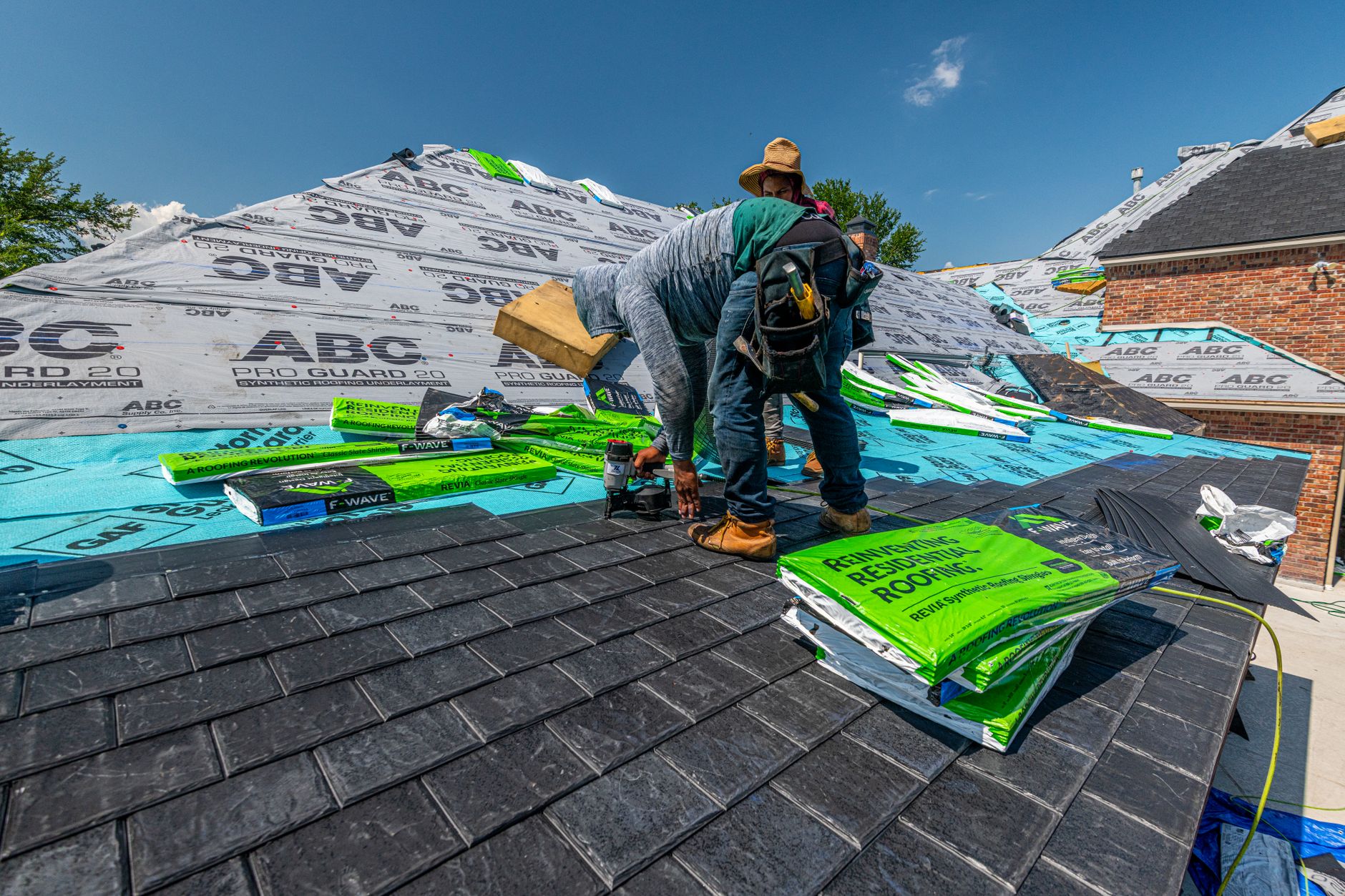
“The roof is new” sounds good, but it does not move the valuation much, because the buyer cannot build on a claim. If instead you write “the roof was replaced in 2021, here is the invoice”, the buyer has a concrete basis to calculate from, and the picture changes. Dates and documentation are what make the difference between a story and a fact.
It comes down to what a new roof is actually worth in a sale. A new roof typically costs 150.000 to 400.000 kr., but the full amount rarely comes back in the selling price. Above all, a new roof removes the price reduction the buyer would otherwise demand, because an old roof is an expense waiting just around the corner. So you do not get the cost of the roof back, but you avoid having to negotiate a deduction.
Kitchens and bathrooms pull in the same direction, and renovated rooms increase the value significantly. However, you rarely recover the full cost once labour, time and interest are added up. The rule of thumb is therefore to tidy up, paint and fix visible defects rather than rebuild, if the aim is to get the most out of your money.
What carries the most weight depends on the type of home. Here is the difference between the two:
| Detached house | Owner-occupied flat |
|---|---|
| The plot, roof, layout and the character of the road carry the most weight. | Floor level, lift, balcony, view and the debt of the owners’ association matter more than the year of construction. |
When you look at a home’s age and condition, there is one thing many people overestimate: the age of the kitchen matters less than you might think.

The energy label and the home’s age – the mandatory document
The energy label is the one document that follows the home whatever its age, and which the buyer can always look up. It is valid for 10 years, but only as long as no significant changes have been made. If you have had a new heat pump installed, added insulation or replaced windows, the label must be updated, because the old assessment no longer describes the home. It is worth keeping in mind, because an outdated label will not help make the sale.
When you sell, you must give the estate agent a valid energy label before the home is put up for sale, and the label must be visible when the home is advertised. It cannot wait until the purchase agreement has been signed. A low energy label, meaning F or G, typically means the home sells at a discount, because the running costs affect how much the buyer can borrow. The label then becomes a bargaining point against you if it is not in order.
If your home has a good label, you can make active use of it. An energy label also shows suggested improvements, which gives the buyer something concrete to work with. It is the same logic as with the roof and windows: documentation rather than storytelling.
How to read the energy classes
The scale runs from A2020 at the top to G at the bottom, and consumption is given in kWh per m² per year. Here is the full scale, so you can look up your home:
| Energy class | Typical consumption per m²/year |
|---|---|
| A2020 | below 20 kWh |
| A2015 | 20-30 kWh |
| A2010 | 30-52,5 kWh |
| B | 52,5-70 kWh |
| C | 70-110 kWh |
| D | 110-150 kWh |
| E | 150-190 kWh |
| F | 190-240 kWh |
| G | above 240 kWh |
A house with a G label can use more than 240 kWh per m² a year, while an A2020 house uses less than 20 kWh. The buyer feels that difference on the heating bill every month.
Owner-occupied flats and the responsibility of the owners’ association
If you live in an owner-occupied flat in a block of flats, there is one important detail: the energy label is prepared for the whole building, not just for your flat. This means you do not have to order a new assessment yourself if a label already exists for the building.
The owners’ association must make a valid energy label available to you as the seller free of charge, and the association has 60 days to do so. It is a deadline you should build into your timetable, so that you are not left with an advert that cannot be published. If the home needs to go on the market quickly, it is worth chasing the association in good time.
Condition report and change-of-ownership insurance – what age costs in practice
Age is not just something recorded in BBR and in the sales brochure. It also shows up on the bottom line when the condition report has to be paid for. The price of a condition report is typically between 3.500 and 9.000 kr. and depends first and foremost on the size, type and age of the home. The older and more complex the home, the more work goes into assessing it.
Detached houses from the 1960s and 1970s are often at the high end of the price range. This is because the foundations, drains and insulation need more thorough investigation once a building has reached that age. If you own a house like that, you can expect the report itself to be one of the bigger costs of the sale.
The same applies if the home has been extended in several stages. Older houses with several extensions and mixed construction types require more professional attention than a newer house built with uniform materials, and that can be reflected in the price of the report. An extension from the 1990s and an original part from the 1960s do not age in the same way, and each has to be assessed on its own.
The condition report’s colours – red, yellow and grey – matter directly: lots of yellow or red markings can make the buyer think more critically about the price and use them as grounds for demanding a reduction. The buyer always reads the report.
The colours have consequences beyond the purchase price itself. They also matter for the change-of-ownership insurance, where many serious issues can affect the price of the insurance or the terms of cover. A house with many issues noted is more expensive to insure, and that is a cost the buyer carries after the handover.
For homes over 25 years old, the risk of hidden defects increases. Rot in concealed structures, defective pipes and poor foundations are exactly what push up the price of change-of-ownership insurance, because older homes carry a greater risk of that kind of problem. For older properties, supply pipe cover is often recommended, since concealed water, heating and drainage pipes running from the house to the public supply can rarely be assessed without digging.
How to describe the home’s age in the sales description
A strong property description treats the year of construction as a neutral frame and puts the emphasis on what can be documented. So you do not write “charming house from 1968” and leave it at that. You write that the house was built in 1968, that the roof was replaced in 2021, that the invoice can be shown, and that the windows were replaced the same year. That way the buyer gets both the age and the answer to the question the age raises: what has been done to it, and when?
This is where many sales descriptions fall short. With older homes, the pages are filled with empty adjectives such as “well-kept”, “impeccable” and “unique”, but the buyer cannot put a figure on any of them. Instead, the text should point directly to the documentation that actually exists. The older the home, the more important it is that the description rests on paperwork and dates rather than on atmosphere.
The documentation you should refer to in the text is not hard to gather. It typically consists of:
-
A BBR notice confirming the floor area, year of construction and number of rooms.
-
Receipts for the roof, windows, installations and drains, each showing the year the work was carried out.
-
Building permits showing that extensions and conversions have been approved.
-
The energy label, which the buyer can always look up and which says something concrete about the home’s energy consumption.
The point of mentioning them is not to pad out the text. It is to give the buyer something to go on before they sit down to negotiate. When the age is presented together with the documented condition, much of the uncertainty that would otherwise turn into a price reduction disappears.
What the sales text should highlight, depending on the type of home
The factors that drive the price are not the same when you sell an owner-occupied flat as when you sell a holiday home. The description should be tailored to the type of home; otherwise you spend space on things the buyer does not give much weight to.
| Owner-occupied flat | Holiday home |
|---|---|
| Floor level, lift, balcony, view and the association’s debt. | Distance to the water, view, zoning status and year-round residence status. |
For an owner-occupied flat, the year of construction matters less than what comes with the address. Floor level, lift, balcony and view are things the buyer notices every day, and the association’s debt says something directly about the finances that lie ahead. The same principle applies to a holiday home, just with different factors: distance to the water, view, zoning status and year-round residence status carry more weight than insulation and condition. They are what determine how the house can be used.
Brikk helps sellers write property descriptions in which the age is presented together with the documented condition, so the buyer can see the value straight away. This supports the selling price and often shortens the time on the market, because the buyer does not have to spend the first viewings working out what has been done, and when.
Leave a comment