
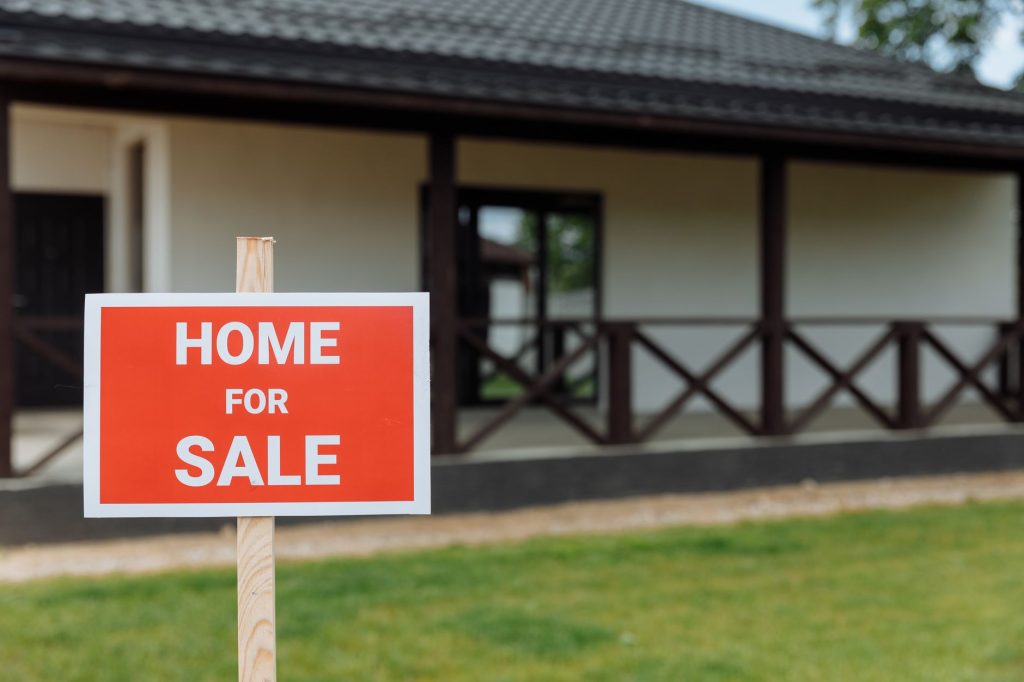
In practice, the price decides how long your home stays on the market. Neither marketing nor the season makes as much difference as the right asking price from day one. If you set the price 10% above market value, the home sells on average 60 – 100 days more slowly than if it had been priced correctly.
When you follow property portals and statistics, you come across two figures that are easily confused. Selling time (salgstid) is a historical figure: the number of days a home was for sale before it was actually sold. Time on the market (liggetid), on the other hand, is a running figure: the number of days a home has been for sale so far and is still on the market. One looks back at a completed sale; the other is ticking away right now on your own home.
On Boligsiden (a Danish property portal), you can see two versions of the time on the market. The current time on the market counts the days the home has been for sale with the current estate agent. The total time on the market adds up all the days with all estate agents over the past three years, including the periods when the home was temporarily taken off the market. The difference between the two can be large, so keep an eye on which figure you’re looking at.
The point is that the time on the market follows the home. Switching estate agents doesn’t reset the total time on the market. A home with 400 days behind it still comes across as a 400-day home after you’ve switched agents. In other words, you can’t wipe the slate clean on a long sales history by changing who you work with along the way.
At the same time, times on the market vary widely across Denmark, and both the local market and the type of home matter a great deal. In some municipalities, homes sell in around 50 days on average, while in others it’s close to 600 days. Overall, detached houses spend around 334 days on the market on average nationwide.
The exact figures and breakdowns for each type of home and area come later in the article. What matters here is that a home’s time on the market isn’t one fixed number, and that the price is usually what moves it the most.
Price your home correctly from day one
The price you set from day one largely determines how quickly your home sells and how much you end up giving away. You need to hit the level the market is actually willing to pay. If you do, the home sells quickly and the discount stays minimal.
The home typically sells quickly and with a small discount, and in popular markets it can even go above the asking price. If you set the price too high, the home stands still, and you end up selling for less than if you’d got it right from the start.
The first 90 days are the window in which the home still comes across as new and in demand on the market. If you wait until after those 90 days to lower the price, buyers have already seen that the home didn’t sell, and that sticks. The so-called time-on-market stigma means that an overpriced home that only has its price reduced after 90 days sells for less than if it had been priced correctly from the start. You can’t erase those 90 days, but you can avoid wasting them.
The difference becomes clear when you look at how much it can cost. Homes with more than 200 days on the market typically sell 8 – 12% below market price. By comparison, the national average discount in the 4th quarter of 2025 was around 5,5% for houses and around 3,5% for flats. A discount of 5,5% equals around 147.000 kr. on a 140 m² house. That’s the money you give away if the price isn’t right from day one.

Presentation and marketing that get buyers to book a viewing
The presentation decides how many people take the next step at all and book a viewing. If the photos and the set-up aren’t right, the sale stalls, because buyers never get past the screen. Most homes lose time long before anyone has seen them in real life.
-
Homes with drone photos and video are booked for viewings 30 – 40% faster than comparable homes without.
-
Professional home staging at 3.000 – 10.000 kr. can cut the time on the market by 15 – 30 days and raise the sale price by 50.000 – 200.000 kr. in active markets.
-
90% of buyers decide whether to view a home based on the photos alone. A professional photographer costs 2.000 – 4.000 kr. and cuts the time on the market by 10 – 20% on average in active markets.
-
Go live on a Tuesday or Wednesday morning. The first 72 hours are critical, and you typically receive 50 – 70% of all your viewing bookings in the first week.

Timing and season for the shortest selling time
After pricing, the season is the second most important factor for the time on the market. Even when the price is right, the selling time can vary a lot depending on when you put your home up for sale. A detached house put up for sale in May typically sells 20 – 40% faster than the same house put up for sale in November, even at the same price.
This doesn’t apply equally to all types of home, though. Some homes have their own rhythm, which you should know before you plan the sale.
| Property type | Best period |
|---|---|
| Detached house | March – June |
| Owner-occupied flat | January – February and April – May |
| Holiday home | February – April |
| Terraced house | March – June |
A detached house put up for sale on 1 March rather than 1 December can mean 40 fewer days on the market and a 3% lower discount percentage.
Managing expectations to avoid the time-on-market stigma
The time on the market doesn’t disappear when you lower the price. It stays in the history that buyers can read, and it affects what they’re willing to offer. A home with 200 days on the market whose price is lowered to the “right” market price still typically sells 8 – 12% below market price. Buyers see both the current price and the whole story behind it. They can tell the home has been standing still for a long time, and they read it as a sign that something is wrong or that the seller is under pressure. That’s the conclusion they take into the negotiation.
Every single price cut stays in the price history, and from the outside a series of cuts can make you look under pressure. That’s exactly the signal buyers look for when they want to push the price down. They don’t need to guess, because the history shows that you’re in more of a hurry than they are. The more cuts, the stronger the buyer’s position at the negotiating table.
There’s also an early warning sign you should take seriously. Lots of viewings without a single offer rarely means that buyers just need time to think. It can be a sign that the market isn’t accepting the price or the presentation. The interest is there, but it isn’t turning into offers. That’s the kind of signal you need to read and act on before the time on the market gets long. If you wait for an offer to come by itself, it becomes harder to avoid a long time on the market, because the market has already formed an opinion of the home.
Correct pricing always matters more than timing. A correctly priced home sells in all 12 months of the year, while an overpriced home won’t sell even in peak season. The season can give you a nudge in the right direction, but it can’t rescue a price the market won’t accept.
How to use price, presentation and timing to keep the time on the market short
The national average for detached houses is 334 days’ total time on the market, but that figure covers very different realities. Herlev has 52 days, while Læsø is at 598 days. If you look at owner-occupied flats in Copenhagen, Brikk’s figures show that a flat in Nordhavn sells in around 45 days on average, while Brønshøj-Husum is at around 75 days. The average selling time for detached and terraced houses in Denmark is 125 days (July 2026), and the number of owner-occupied homes for sale has fallen for seven months in a row. The market has tightened, but how long your home takes still depends mostly on you and the choices you make before it goes live.
To avoid a long time on the market, there are three things you can control yourself:
-
Pricing is the most important factor, because a home that’s priced correctly from day one sells quickly and with a minimal discount.
-
Presentation and marketing decide how many buyers take the next step at all and book a viewing.
-
Timing and season can shorten the selling time, but can never rescue a price the market doesn’t accept.
A correctly priced home typically sells quickly and with a minimal discount, while an overpriced home risks ending up with a bigger overall discount than the seller would have accepted at the start. Before you set the price, the smartest next step is to get a realistic valuation of your home, so the figure in the advert matches what the market is actually willing to pay.
Leave a comment