
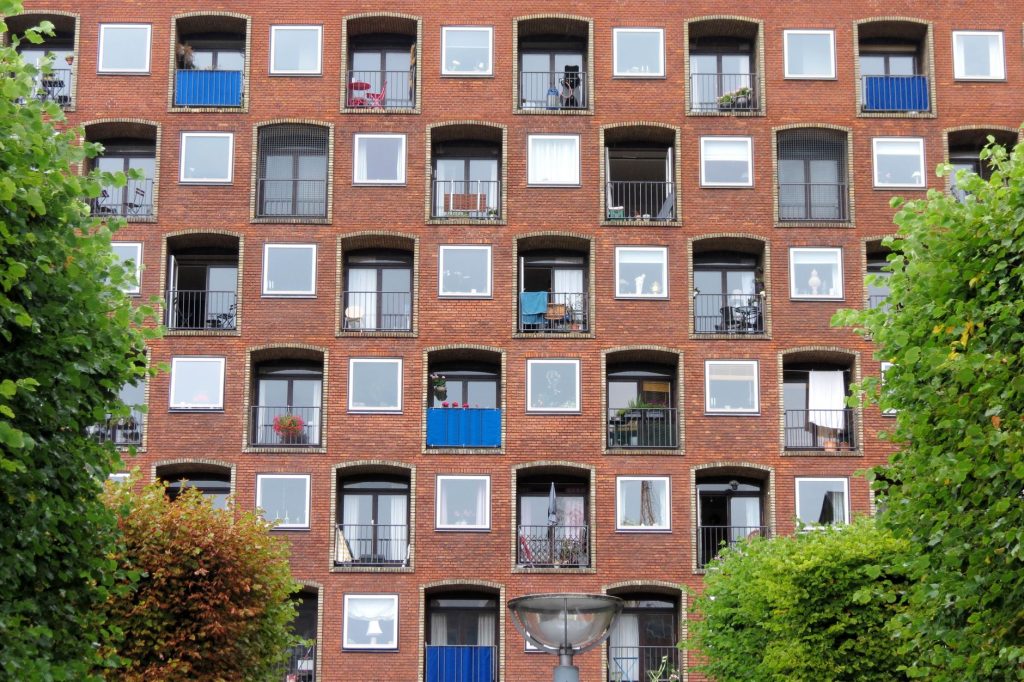
Many people go wrong when they look at financing for cooperative homes. You cannot take out a traditional mortgage loan for your share. You do not own the home directly. You have a membership and a right of use through your share certificate (andelsbevis). Mortgage loans are only granted against security in real property, and a share is not real property.
Instead, you typically finance the purchase with a cooperative housing loan from a bank, which takes a charge on your share. You pay the association's own loans on the property indirectly through the monthly housing charge. Your terms depend on both your finances and the association's finances. A cooperative housing loan has different terms from a traditional mortgage loan for an owner-occupied home.
It may seem complicated now, but we will go through it step by step. You will get to grips with how the security works, what determines the interest rate and what to look at in the association's accounts. We also look at what the loan costs, how to calculate it, and how to obtain and compare offers from several banks.
What determines the interest rate on cooperative housing loans from a bank
Many cooperative housing loans from banks have a variable interest rate, but some banks also offer to fix the rate for a period, e.g. 3, 5, 7 or 10 years. The bank takes a higher risk than a mortgage lender because it only has security in your share and not in the property itself. The bank sets the rate itself based on your finances and the association's figures, and a variable rate can be changed by the bank in line with its terms.
Rates vary widely, and they are often higher than on loans for owner-occupied homes. At Nordea, for example, the rate on variable cooperative housing loans ranged between 3,24 and 7,24 % in October 2026. Where you end up depends on the bank's risk assessment of you and the association.
Interest-only periods can be tempting, especially when the budget is tight, but they typically come at the price of a higher interest rate, and the bank will also require a solid disposable income. You get breathing space now, but you pay for it.
Setting up the loan costs money too. Expect an arrangement fee of roughly 0,5 – 2 % of the loan amount. On top of that come the bank's fees, e.g. document and valuation fees, and the registration duty when the charge on your share is registered in the cooperative housing register (andelsboligbogen). In 2026 the duty is 1.825 kr. plus 1,25 % of the amount of the charge.
The bank does not just assess you. The association's key figures carry great weight: the loan-to-value ratio on the property, the interest rate on the association's loans, the remaining term, and whether there are swap agreements. These figures directly affect the interest rate on your loan, because your risk is tied to the association's finances.
How a charge on the share certificate works and your real risk
When the bank takes a charge on your share certificate, it does not get security in the property itself. The charge is registered in the cooperative housing register at the Danish Land Registration Court (Tinglysningsretten). Before that can happen, the association must confirm to the bank that you are approved as a member with a right of use to the home. This differs from a mortgage loan, where the security is in the property itself.
If you do not repay the loan, the bank cannot take over the property. It can only have the share sold following a decision by the enforcement court (fogedretten). The association deducts its own claims against you, e.g. unpaid housing charges, from the sale proceeds before the bank is paid. This makes the risk higher for the bank and the price higher for you.
-
The association cannot prohibit you from pledging your share. The articles of association may, however, stipulate that you may borrow no more than 80 % of the share's value secured on the share.
-
Also ask whether the association's administrator charges a fee for preparing the statement for the bank.
-
Be aware that the security can fall in value. If the andelskrone falls because of a lower valuer's assessment or more debt in the association, the value of the bank's security falls. The bank may then demand extra security or a higher interest rate.
-
You can strengthen the security with additional collateral, for example in another home, or with a guarantor. However, your personal risk then rises sharply.
Consider the trade-off: better terms in return for more personal risk. Only decide once you have an overview of the interest rate, the fees and the consequences of repayment or sale.

The key figures in the association's finances that the bank assesses
The bank does not just look at your salary and your spending. It also goes through the association's finances, because your loan is tied to the strength of the whole association. Even with healthy personal finances, a weak association can make the loan more expensive or harder to get.
-
Loan-to-value ratio: The bank looks at the association's debt relative to the property's value. High debt means higher risk and can push up the interest rate.
-
How the andelskrone is set: The value of the share is often based on valuers' assessments. The method and how often the assessments are made affect the price and thus the security of the loan. Large swings change your options from year to year.
-
The operating budget: Heating, maintenance, insurance and administration must add up. Too little set aside for future work risks a higher housing charge later.
-
Technical condition and projects: The 10-year plan and reports on the roof, facades and installations point to upcoming costs. Planned renovations can raise the housing charge noticeably, depending on how they are financed.
-
Financial risks: Interest rate swaps with a negative value, short fixed-rate periods or loans in foreign currency make the assessment more complex. The bank may then require a higher interest rate or extra security.
All of this goes into the credit assessment. It not only determines whether you get the loan, but also governs the price over time.
How to calculate a cooperative housing loan and compare interest rates
It takes a little preparation to calculate your cooperative housing loan and compare interest rates, but it is manageable. Start by gathering the key figures: the purchase price or andelskrone, the current housing charge for the home, and a realistic estimate of future increases. Also get an overview of the type and rate of the association's debt, as it directly affects your costs. Write down your own contribution, the desired term and whether you want an interest-only period.
Once the figures are ready, you work out the loan payments. Use either the annuity formula or the banks' calculators to see the monthly payment. Test three interest rate levels: the rate the bank offers, then the rate plus 1 percentage point and finally the rate plus 2 percentage points. You immediately see how the rate shifts your disposable income, that is, what you have left each month after the loan and housing charge.
Remember the one-off costs, as they add up to more than many people expect. The arrangement fee is typically between half a per cent and two per cent of the loan. Also include the registration duty on the charge on your share and on any extra security such as a charge on another property, plus the bank's valuation and document fees.
When you compare offers from several banks, do not look only at the nominal interest rate. Check the APR (ÅOP), because it combines interest and costs in one figure and gives a clearer picture of which loan ends up cheapest overall.
Also do a stress test on the housing charge. Imagine that the interest on the association's variable-rate loans rises by 2 percentage points. What does that do to your monthly housing charge? If the housing charge is 3.000 kr. now, it could for example rise to around 3.600 kr., depending on how much of the association's debt is at a variable rate. Write the calculation down as notes next to your other figures, so the risk is clearly visible.
If you follow these steps, you get a realistic overview of the finances of your cooperative housing loan, and you avoid unpleasant surprises later.
Get better cooperative housing loan offers and avoid pitfalls
Before you ask for cooperative housing loan offers, get your paperwork in order. Gather the association's last three sets of accounts and budgets, the valuer's assessment, the articles of association and the minutes of general meetings. A 10-year maintenance plan and an energy label often show what costs or savings are lurking. For your part, have your payslips and annual tax statements ready. The bank assesses your ability to pay based on them.
Get at least two independent offers with written credit approvals and a full cost overview. Ask for both fixed and variable rates, plus the APR on all variants, so you have everything together for your comparisons. Once the offers are in, negotiate: ask for a lower rate, ask about extra repayments without a fee, check the price of an interest-only period, and find out the requirements at a high loan-to-value ratio.
Look for red flags in the association's figures. High short-term debt or low equity points to pressure on the finances. Legal cases against the association or swaps with a large negative value are clear warnings. A lack of provisions for renovations often ends in a higher housing charge. If any of this turns up, go through the material extra carefully before you decide.
Make a decision sheet where you collect the loan payment, housing charge, one-off costs and the results of the stress tests. Use scenarios such as +2 percentage points on the interest rate or +15 % on the housing charge. It gives you an overview and a solid assessment of which solution keeps your disposable income positive, even when the market wobbles a little.
The time you spend here brings peace of mind afterwards. Get several offers, read the figures closely, and preferably bring in an independent adviser before you commit.
Leave a comment